D&D 5e: MAJORA'S MASK
Designing Experiences for Live Play Beyond the Screen
A 100+ page tabletop adventure inspired by Nintendo's Legend of Zelda: Majora's Mask, designed to help Dungeon Masters quickly navigate complex information during live gameplay.

Live reference guides, not novels
Unlike traditional novels, tabletop adventures function as live reference guides. Dungeon Masters must balance storytelling, combat, rules, roleplaying, and unpredictable player decisions while constantly navigating the book.
The Design ChallengeHow might we organize a large-scale custom tabletop adventure to support fast decision-making without interrupting gameplay?
Design PrinciplesScanability
Support quick reference during encounters.
Progressive Disclosure
Reveal story information only when players reach it.
Reduce Cognitive Load
Prioritize only the information users need most.
Information Hierarchy
Present the most important information first.
Consistency
Use repeatable layouts across every chapter.
Familiar Conventions
Follow familiar D&D layouts for instant recognition.
Designing for Two User Groups
Unlike most products, this project had two very different audiences with different goals.
Dungeon Masters need to:
- Find information within seconds
- Manage encounters confidently
- Track rules and story progression
- Adapt to unpredictable player choices
Players need to:
- Discover the world naturally
- Make meaningful decisions
- Stay immersed in the story
- Avoid spoilers
The Process
The project followed an iterative design process, with research, playtesting, and feedback shaping each revision to create a more intuitive experience for Dungeon Masters.
Analyzing the Current Medium
Before starting, I analyzed official Dungeons & Dragons 5e books to understand the conventions Dungeon Masters already rely upon.
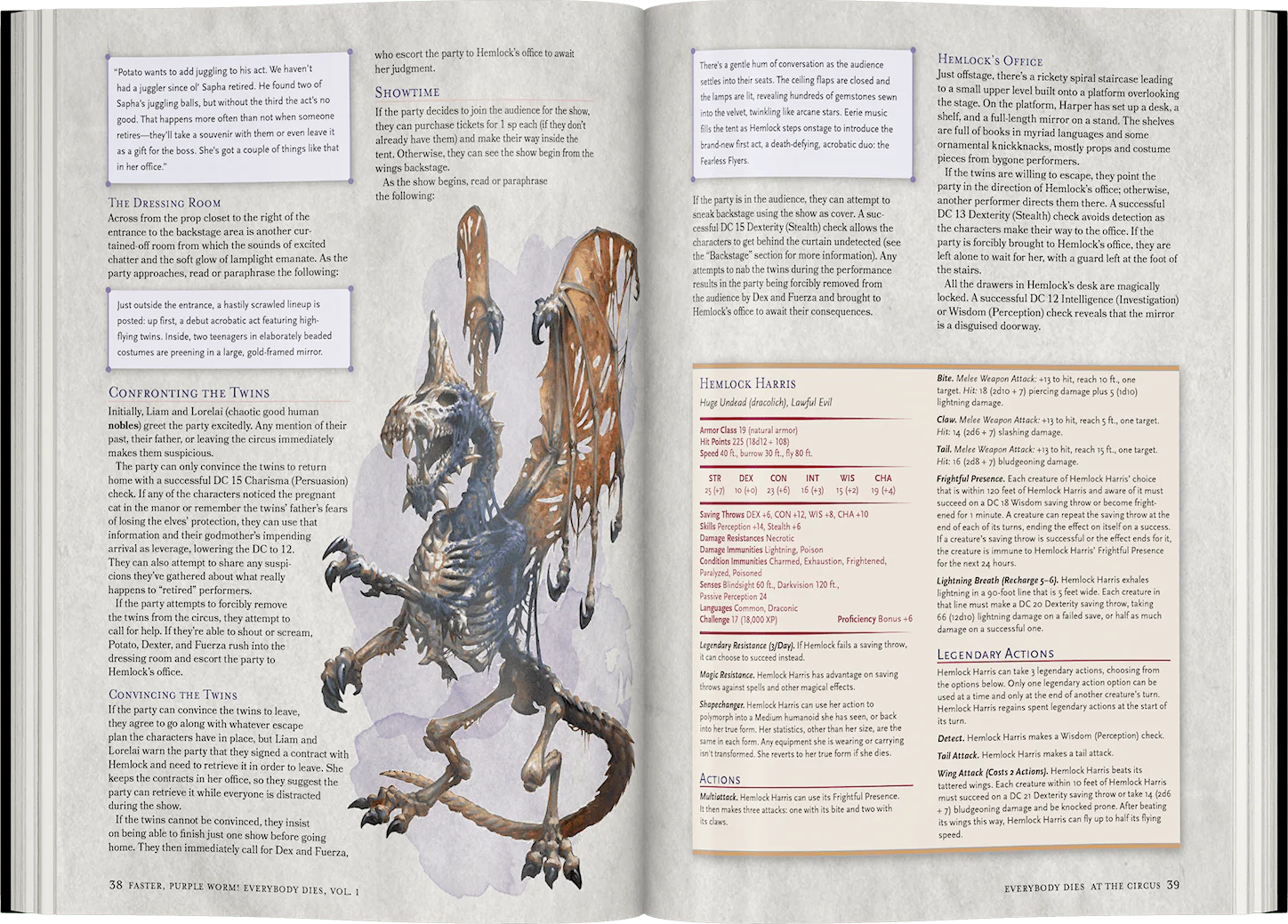
Page spread from an official D&D 5e adventure book
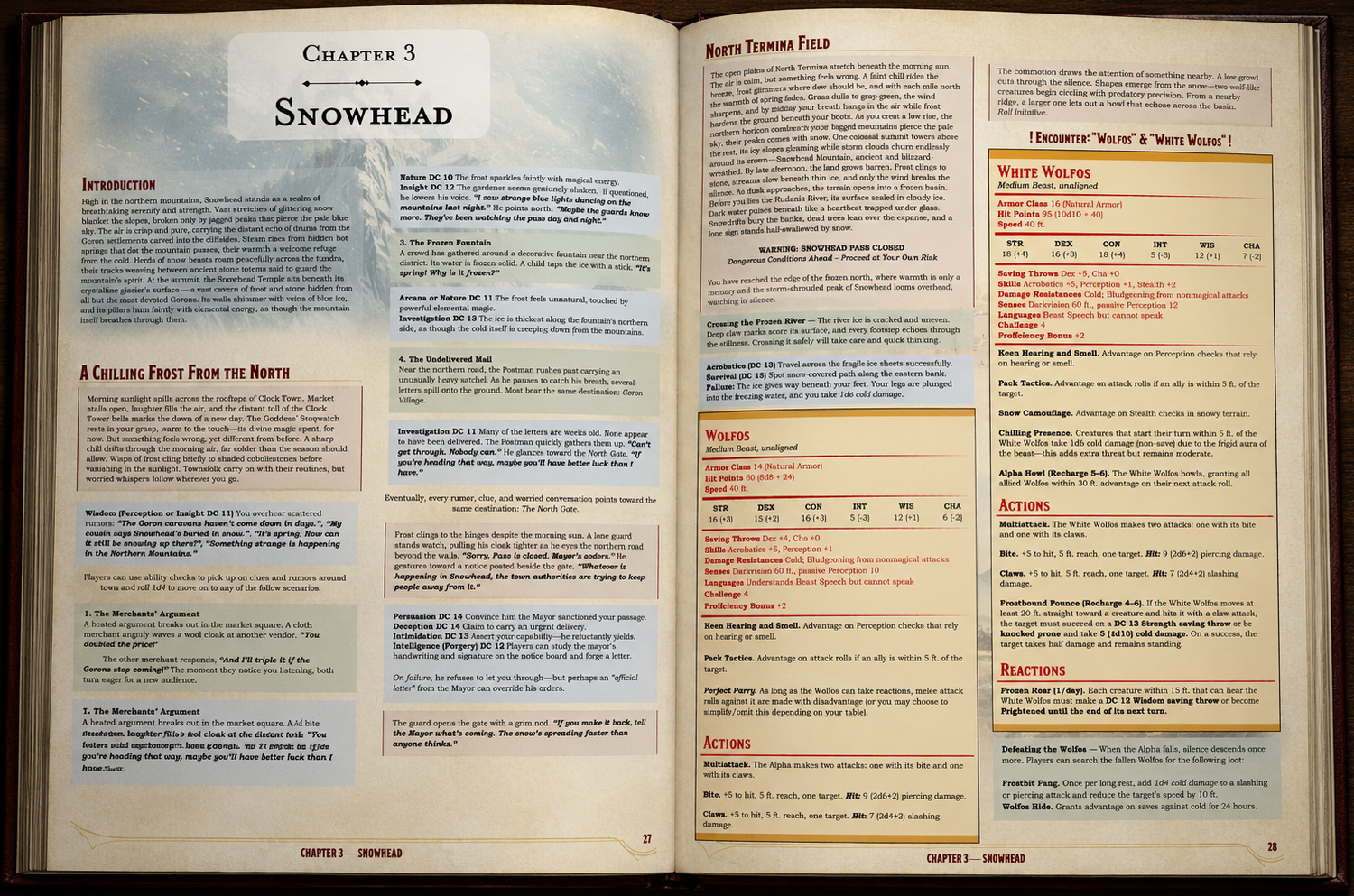
Page spread from Majora's Mask 5e (AI-generated using pages from my original book)
Key Findings
User Discussions & Reviews
Discussions across Reddit and Discord communities showed no clear preference between physical and digital formats. However, those who preferred books consistently valued having a structured, ready-to-run adventure.
Turning Research Into Design
| Research Insight | Design Decision | |
|---|---|---|
| Dungeon Masters reference books during gameplay | → | Standardized layouts across every chapter |
| Encounters require fast access | → | Consistent encounter templates |
| Story progression changes constantly | → | Progressive disclosure |
| Players see different information than the DM | → | Separate player-facing and DM-only content |
| Navigation must remain predictable | → | Clear chapter hierarchy and cross references |
Every Chapter Evolved
Rather than reinventing how D&D adventures are presented, I explored ways to improve the experience while preserving familiar conventions — reducing cognitive load, improving scanability, and making information easy to find during live gameplay. Each revision refined encounter balance, story pacing, NPC dialogue, page layout, and readability.
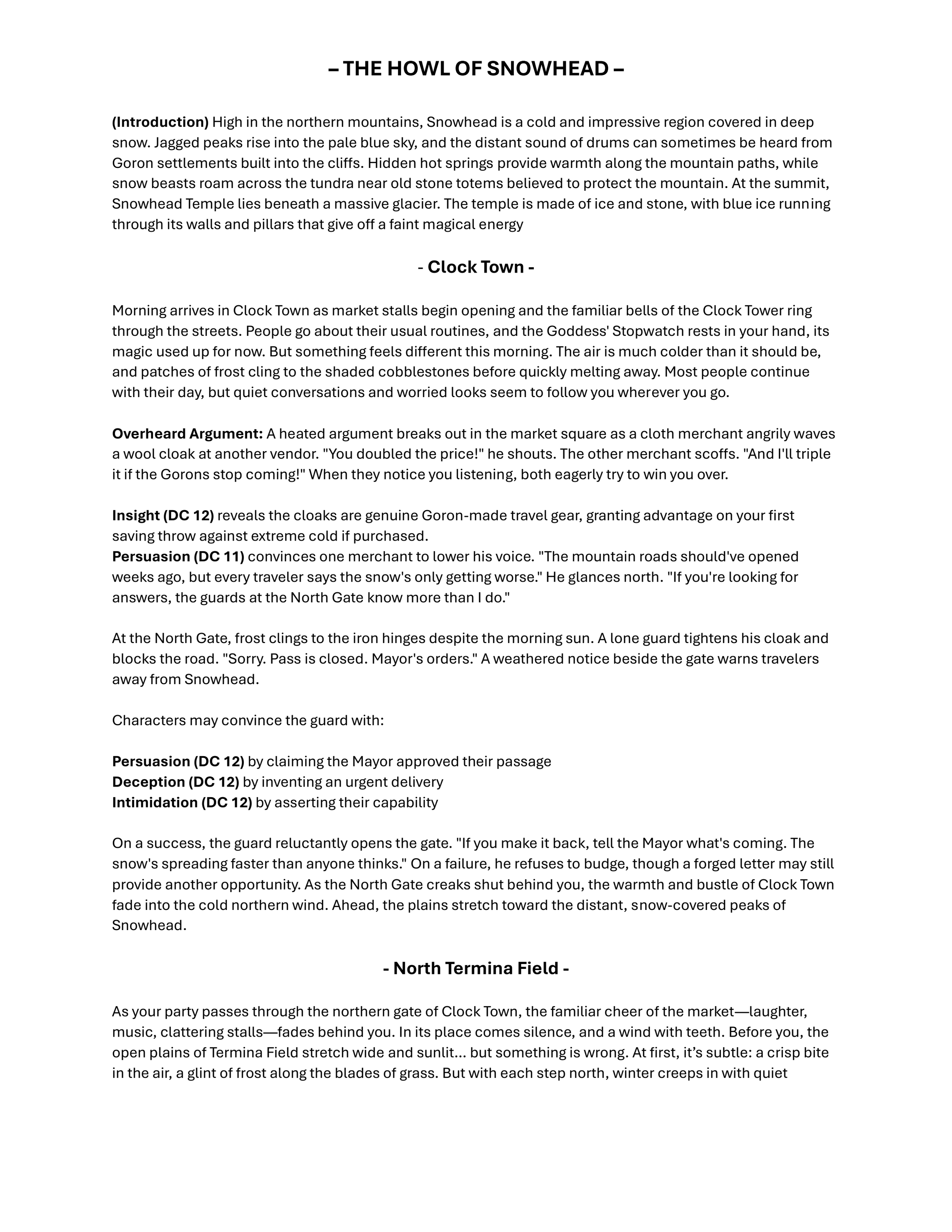
1st draft — Google Docs & Word (digital only)
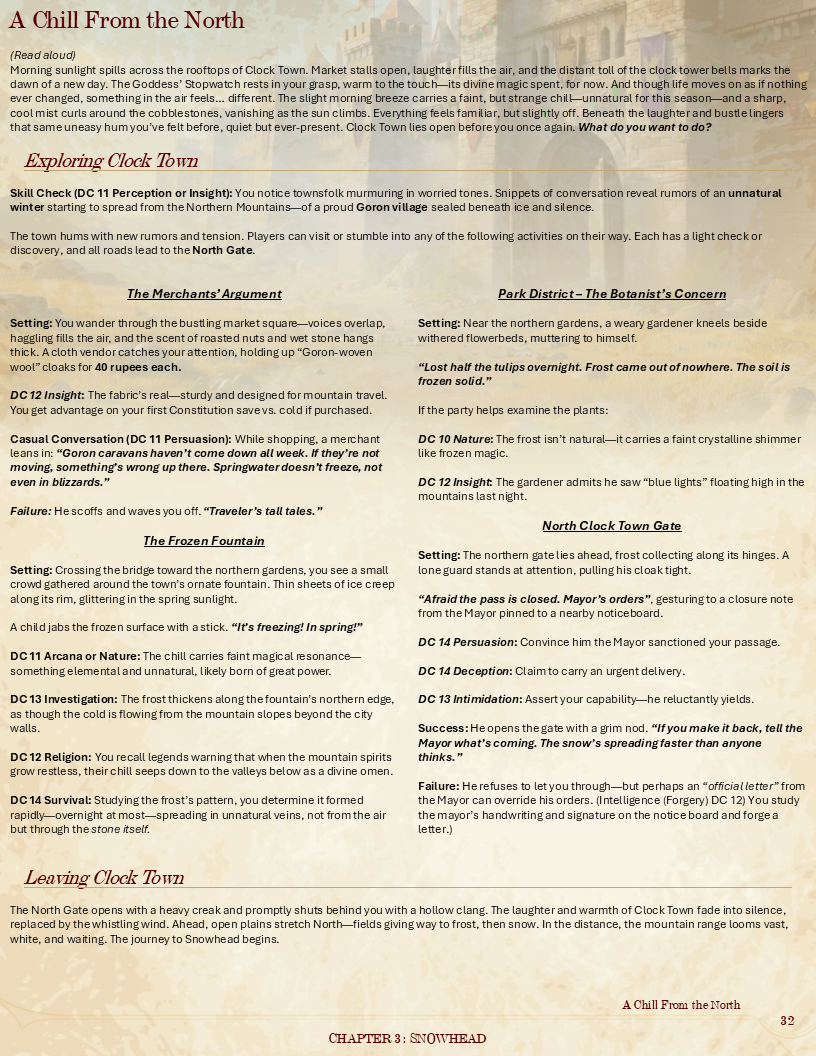
2nd draft — Google Slides (digital & printed)
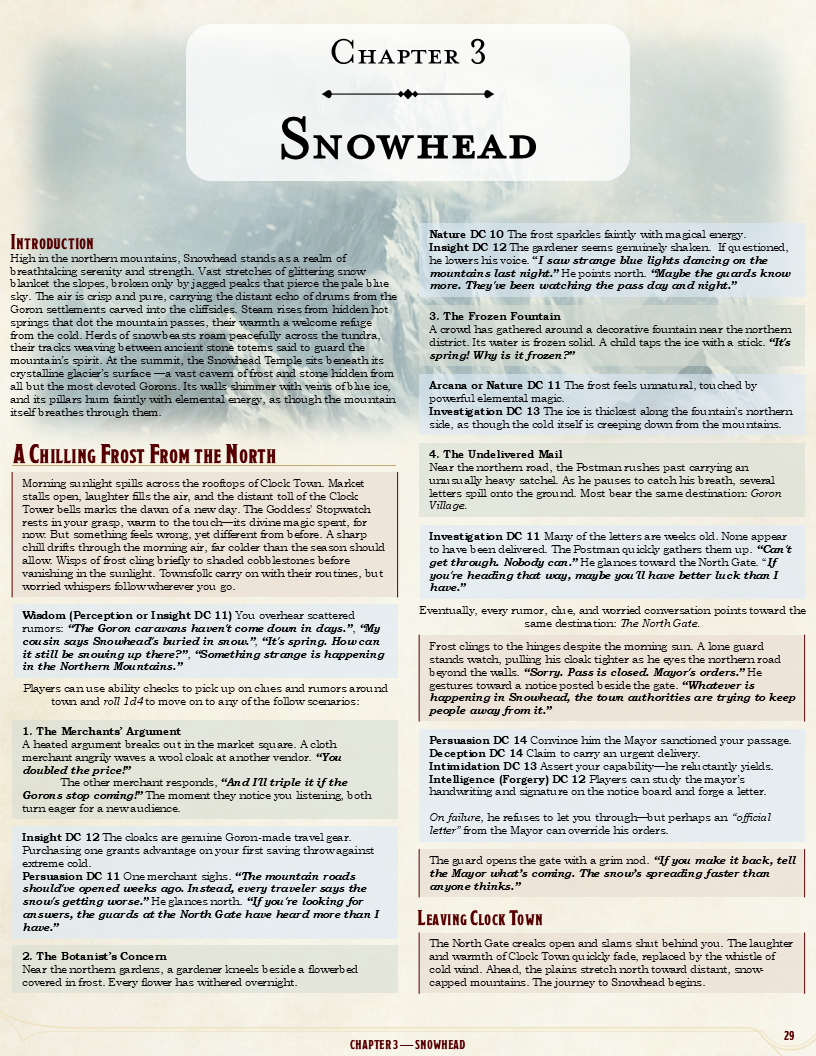
3rd draft — PowerPoint & Figma (digital & printed)

4th draft — PowerPoint & Figma (digital & pending printing), re-edited
Clear Information Hierarchy
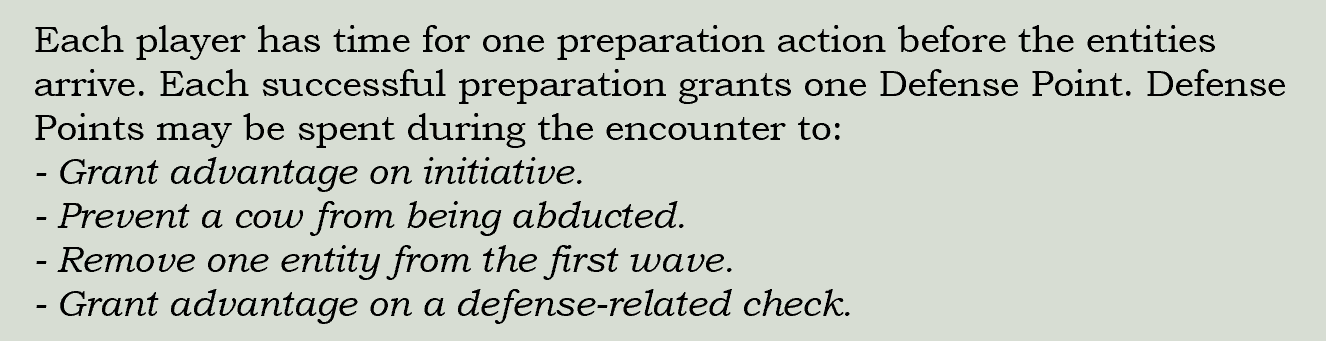
Dungeon Master Notes

Read-Aloud Text

Possible Ability Checks
Standardized NPC Templates
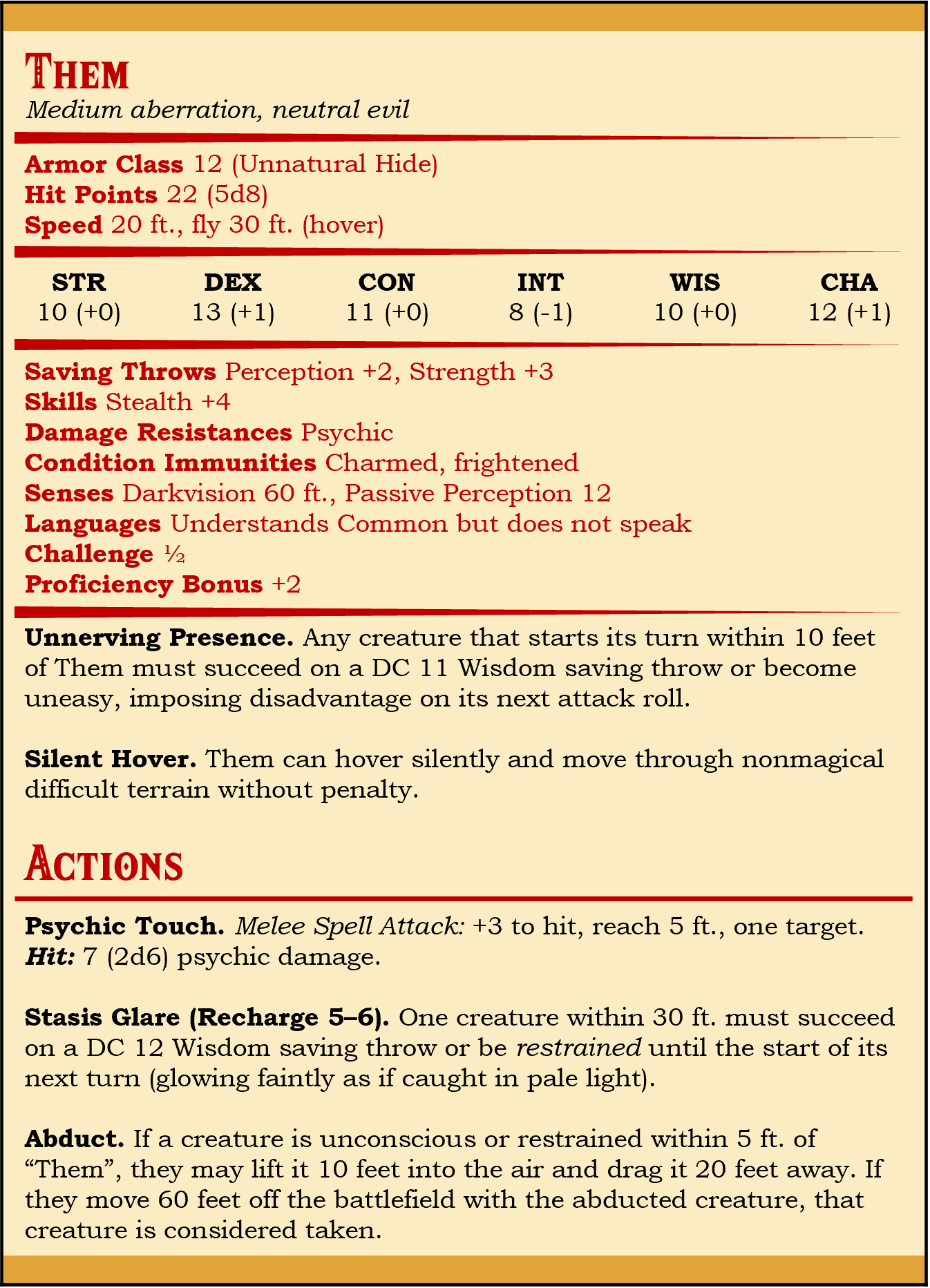
Designing for Scanability
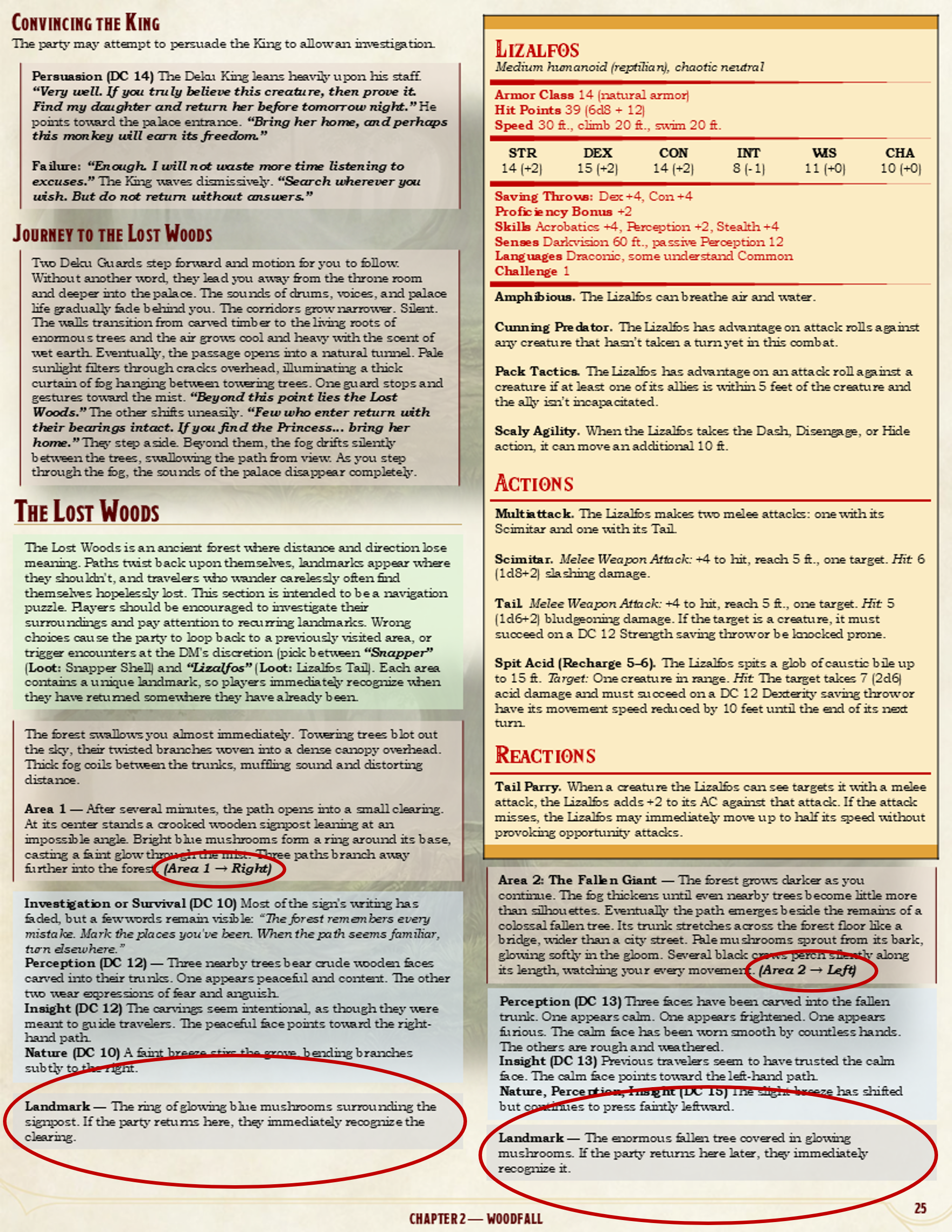
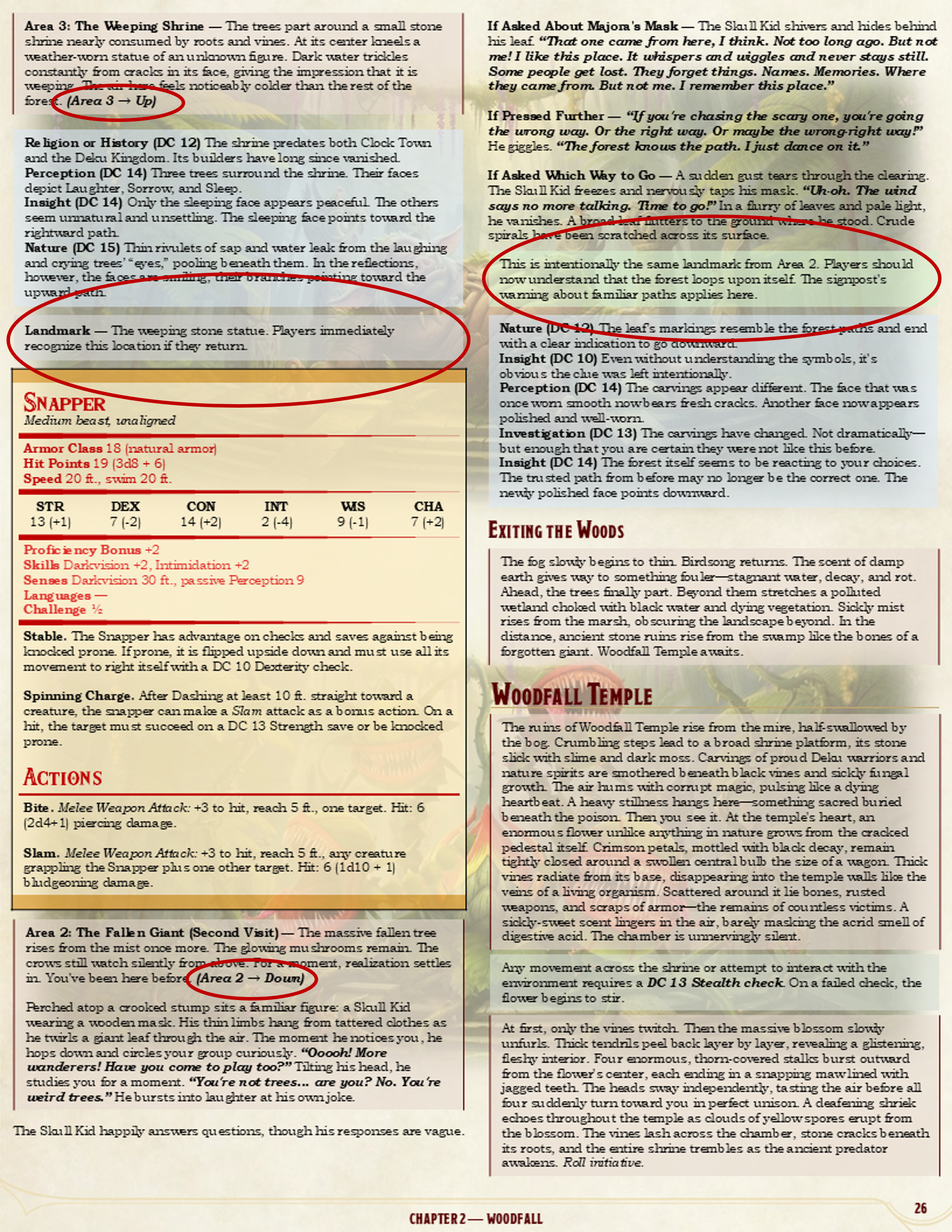
Every chapter follows a consistent structure, using chunked content and predictable layouts to reduce cognitive load and help Dungeon Masters quickly find information during gameplay.
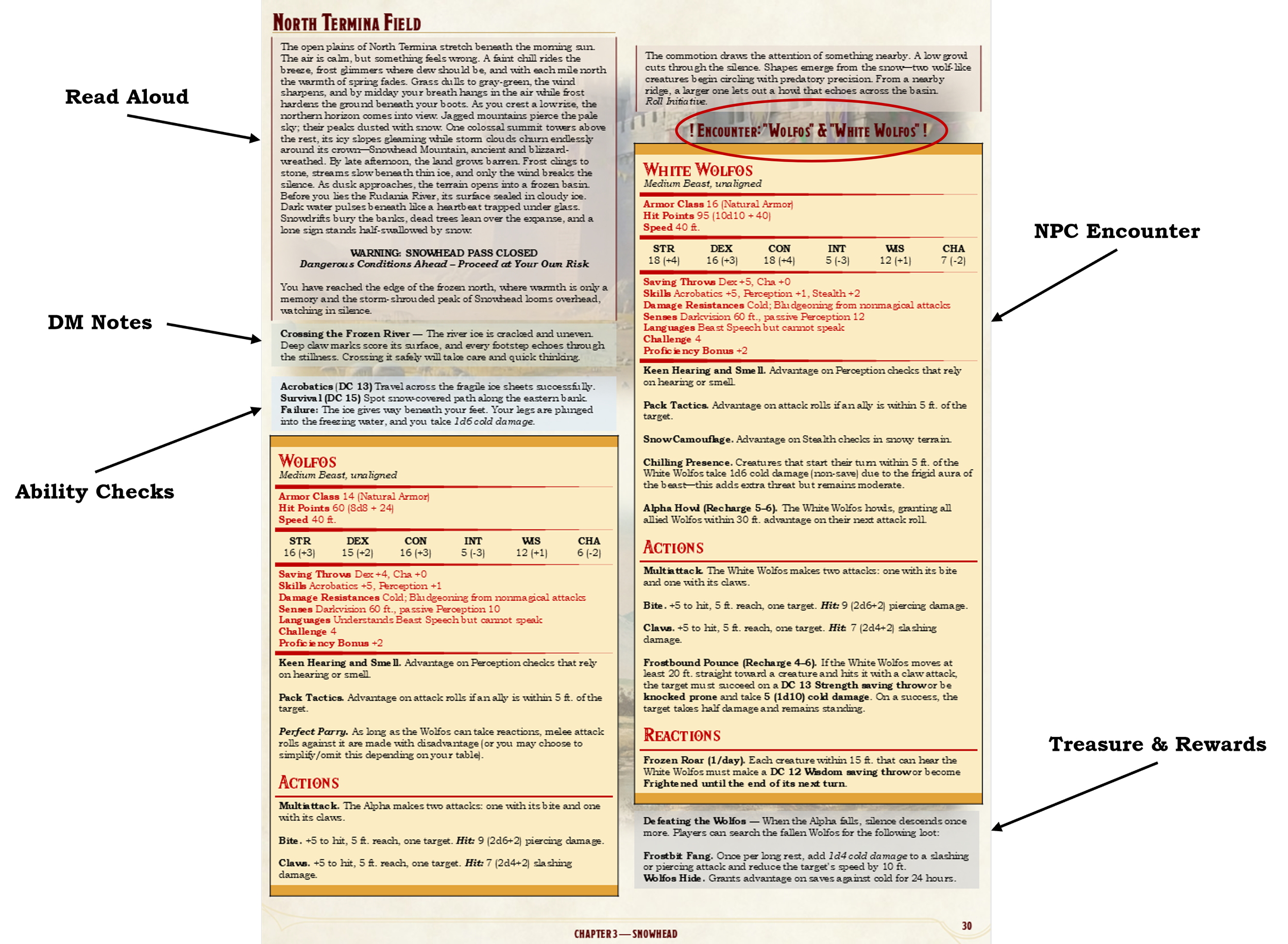
Designing for Scanability
Every page was designed to support fast decision-making during live gameplay. A consistent visual hierarchy helps Dungeon Masters quickly locate and process information through:
Recognition Over Recall
Following familiar patterns allows Dungeon Masters to recognize where information is located instead of remembering where they last saw it. Consistent layouts reduce mental effort during live gameplay.
Progressive Disclosure
Content is progressively revealed as players advance, reducing cognitive load by showing only the information Dungeon Masters need at each moment.
Going Beyond the Book
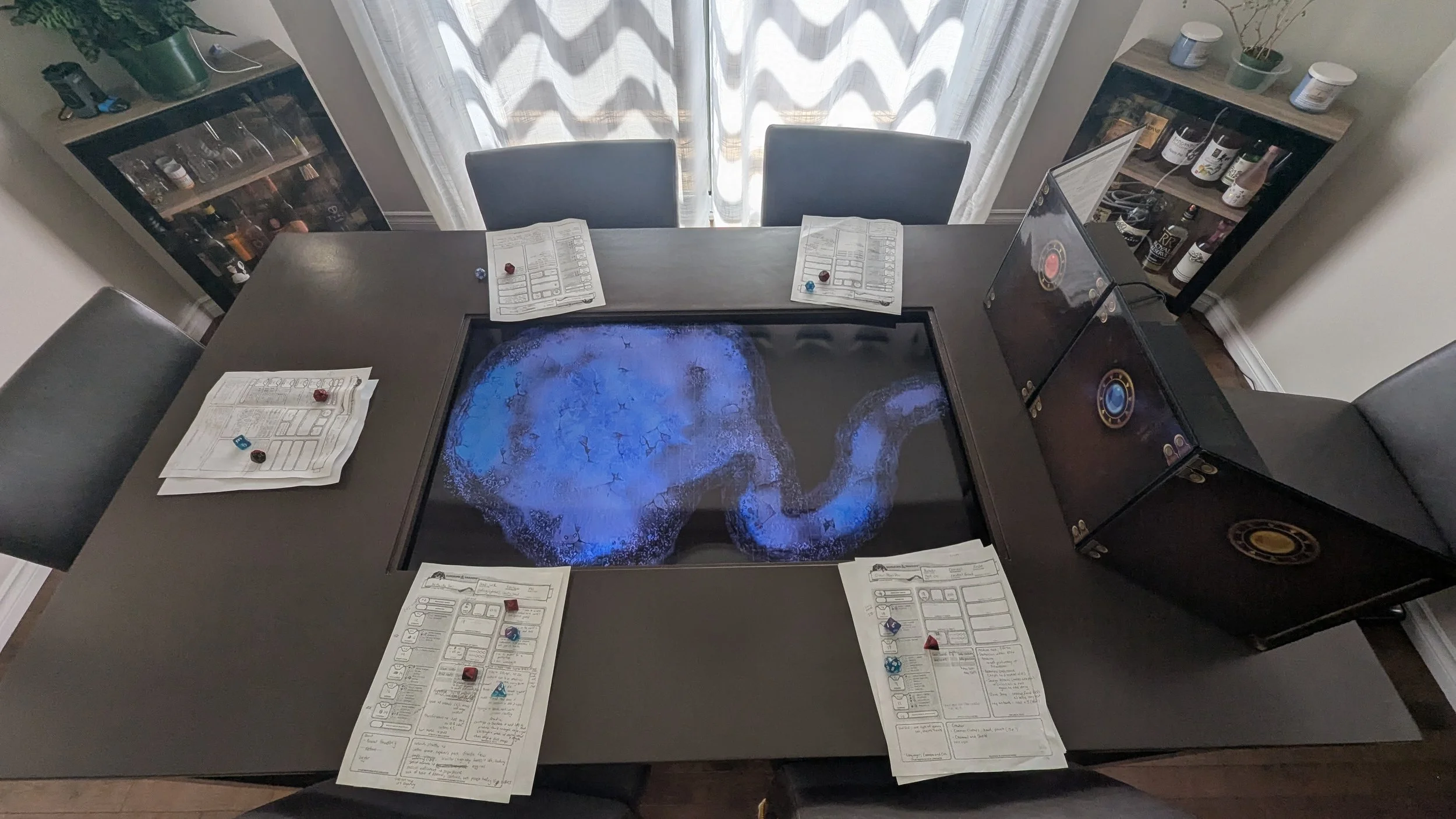
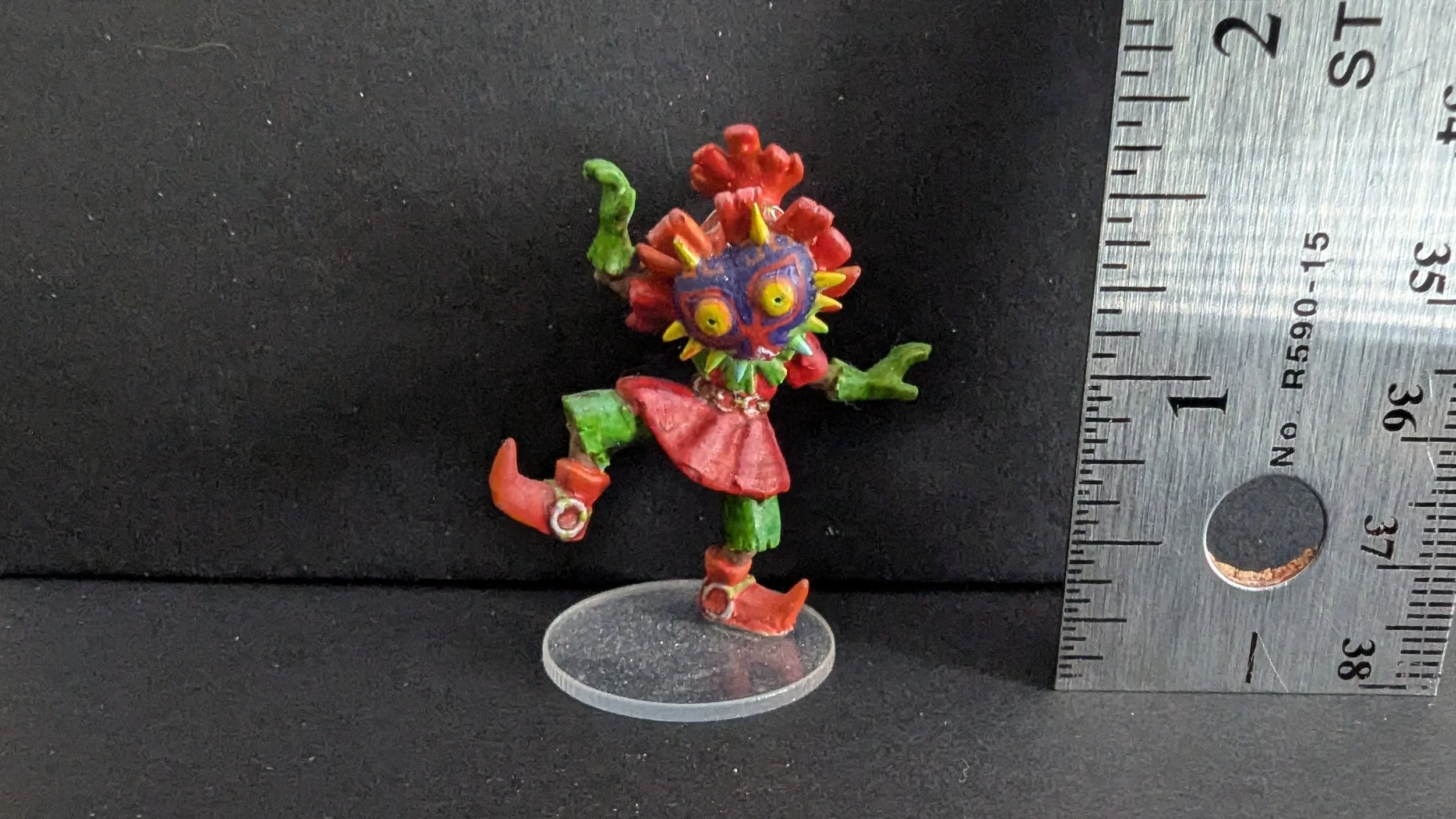
To support live playtesting, I also designed several enhancements for the physical play experience — a custom D&D gaming table with an integrated TV for interactive digital maps, 3D-printed custom miniatures, and custom soundboards with ambient music and voice clips.
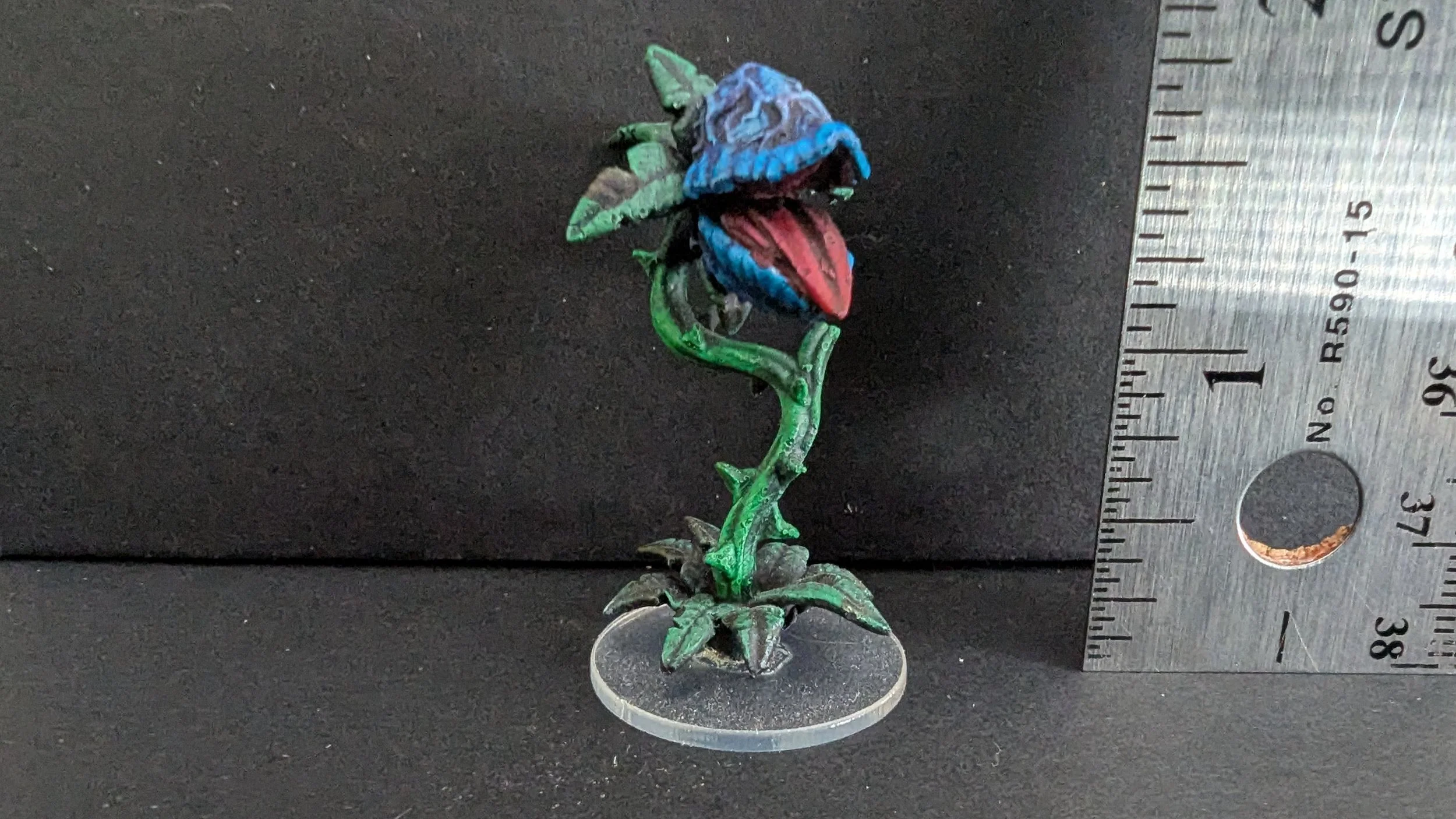
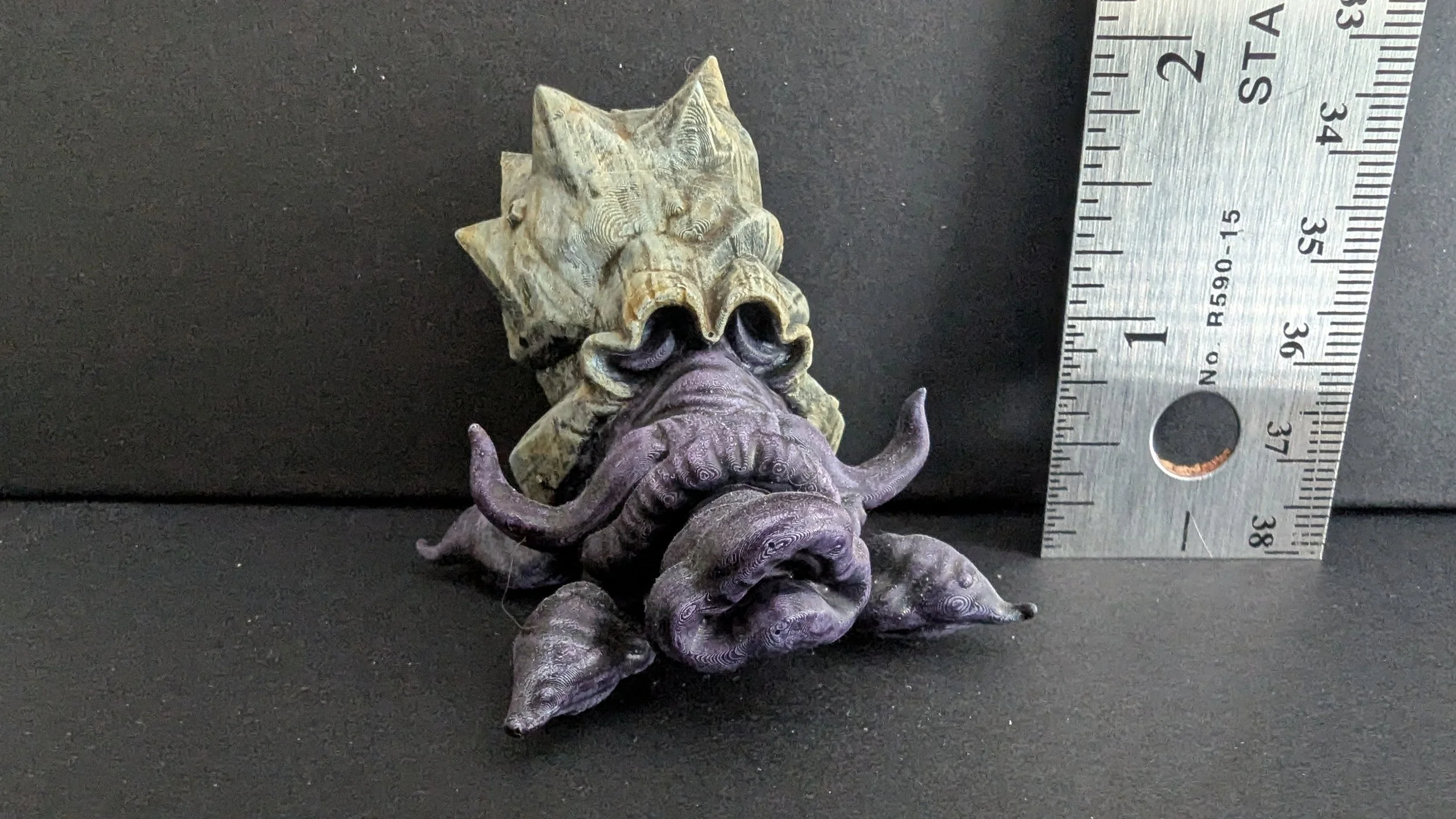
Created using AI voice synthesis from an original script, royalty-free sound effects, and audio from The Legend of Zelda: Majora's Mask for this non-commercial fan project.
Usability Testing
Multiple rounds of playtesting were conducted to evaluate the effectiveness of the book's design, measuring usability, information retrieval, cognitive load, and overall satisfaction for both Dungeon Masters and players.
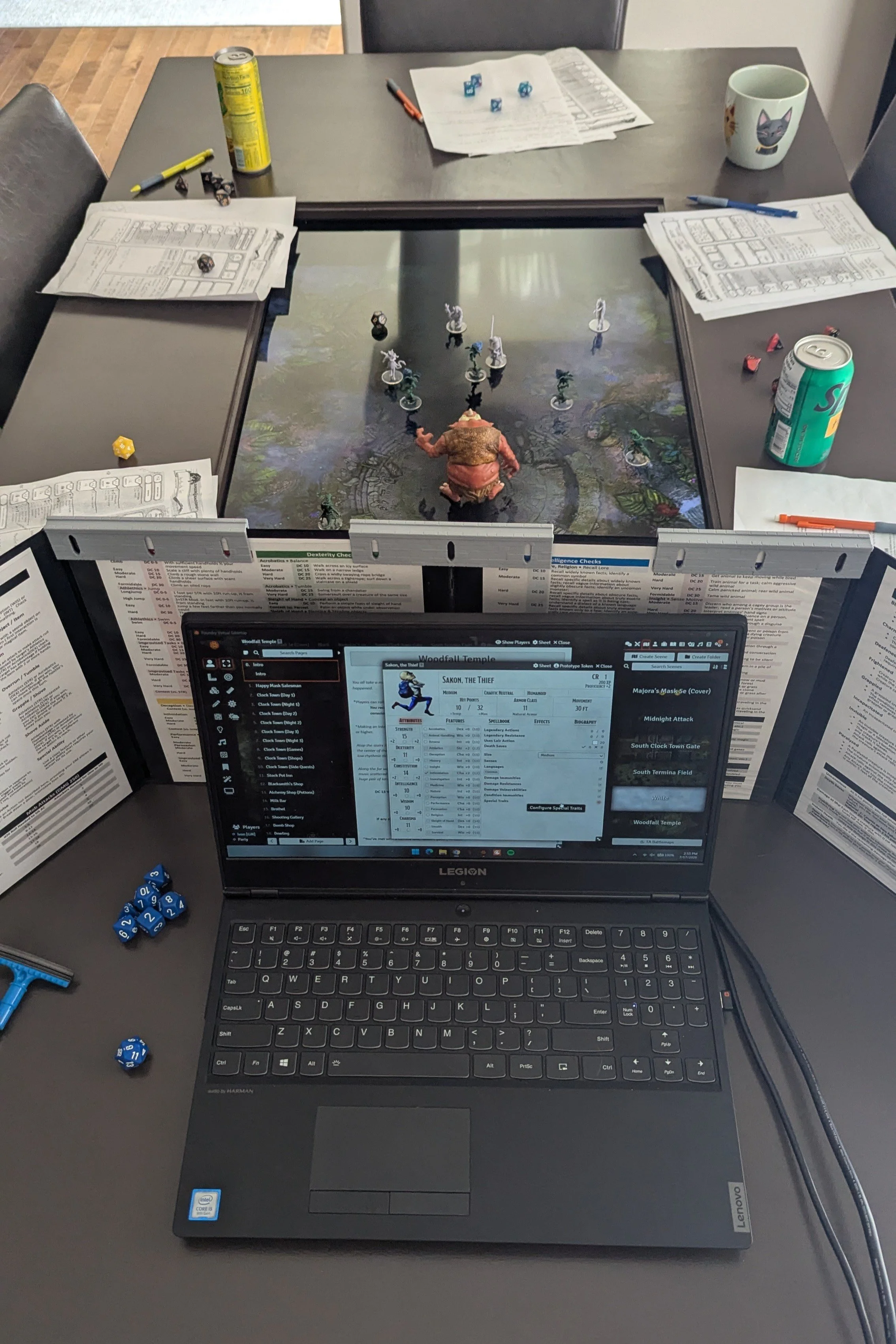
Without the Book
- Reliance on a laptop led to clutter and information overload.
- Multiple windows slowed information retrieval.
- Players reported the DM's attention shifted from the table to the screen.
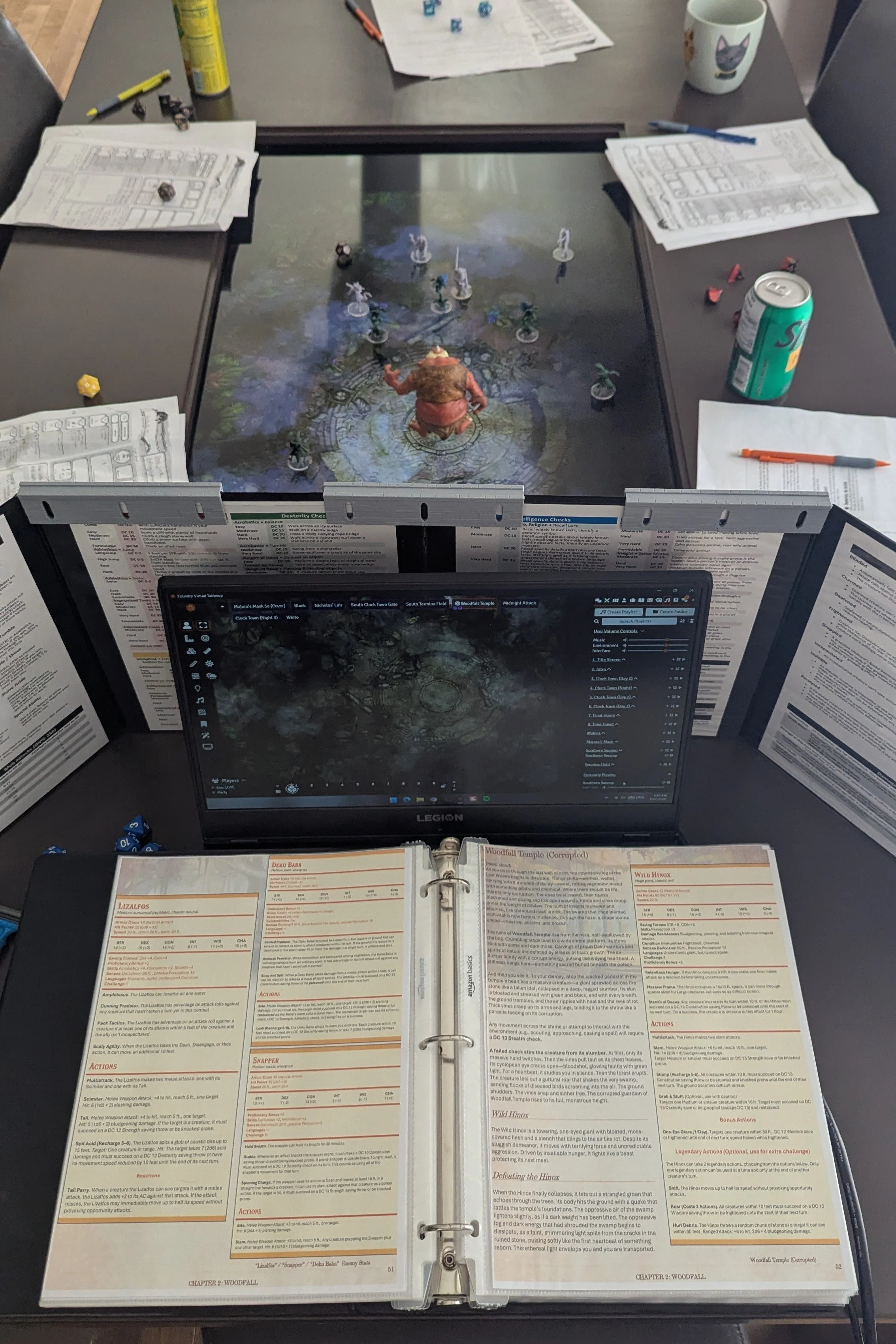
With the Book
- More screen space for supporting tools.
- Faster access to key information.
- Greater focus on players, not the screen.
Key Findings
Final Outcome
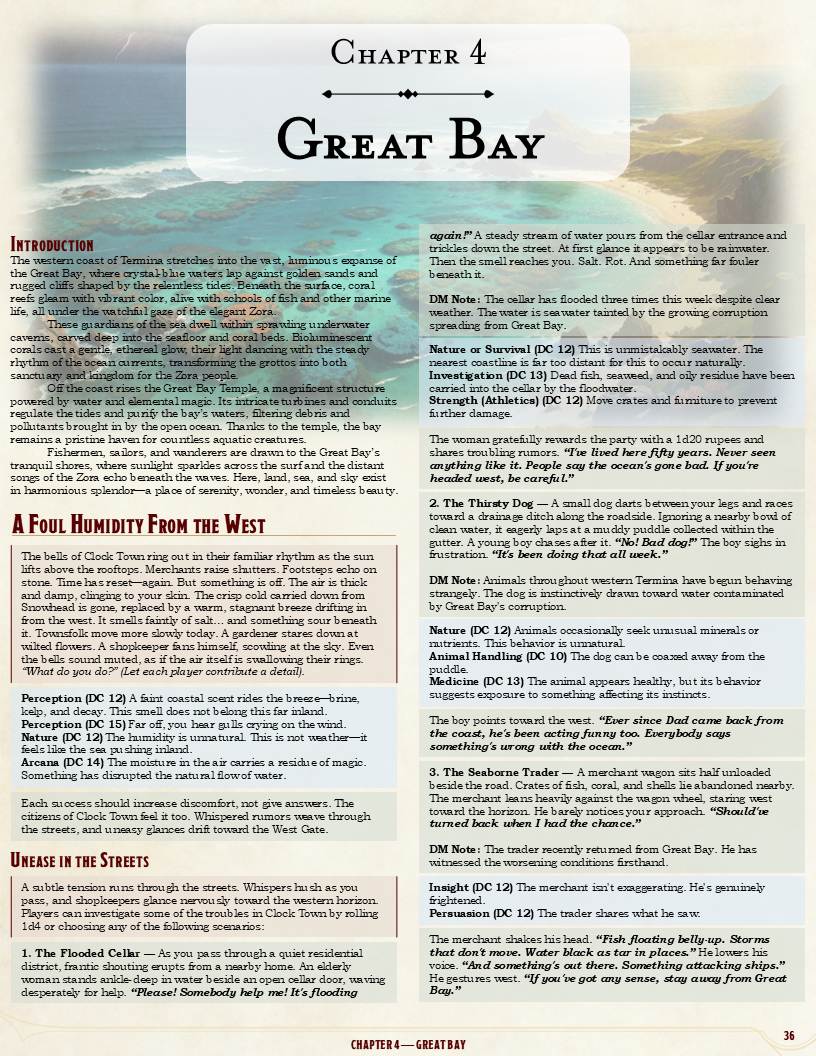
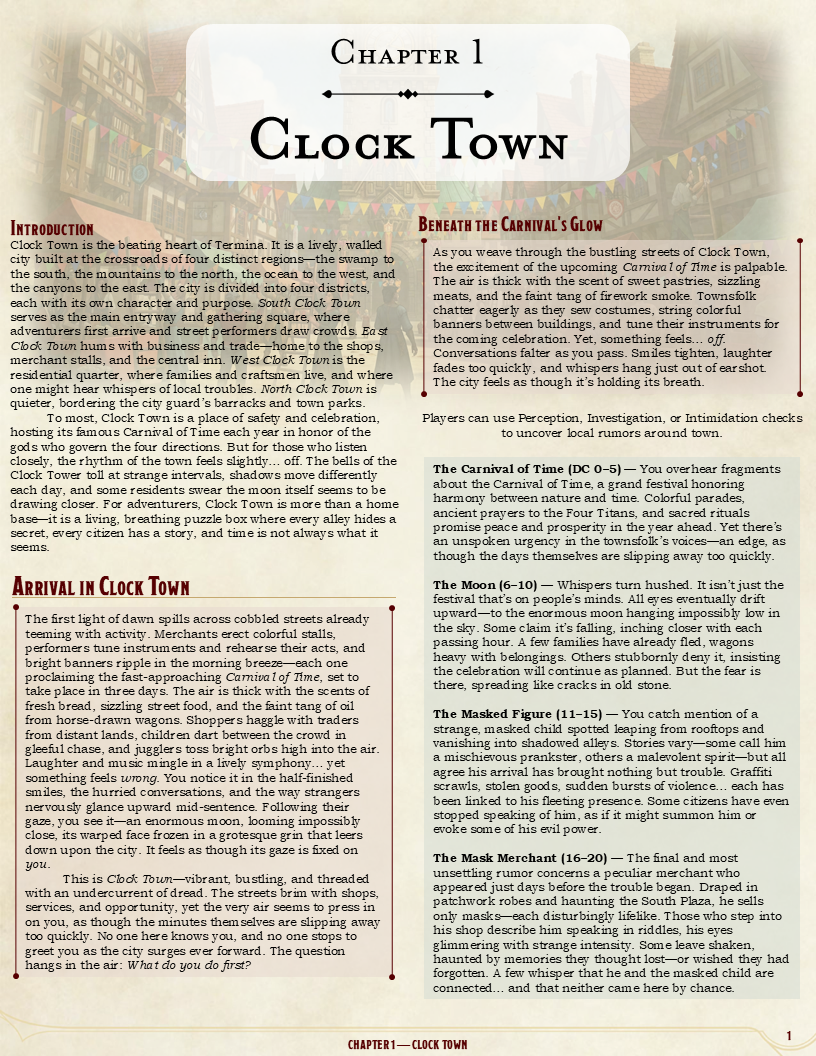
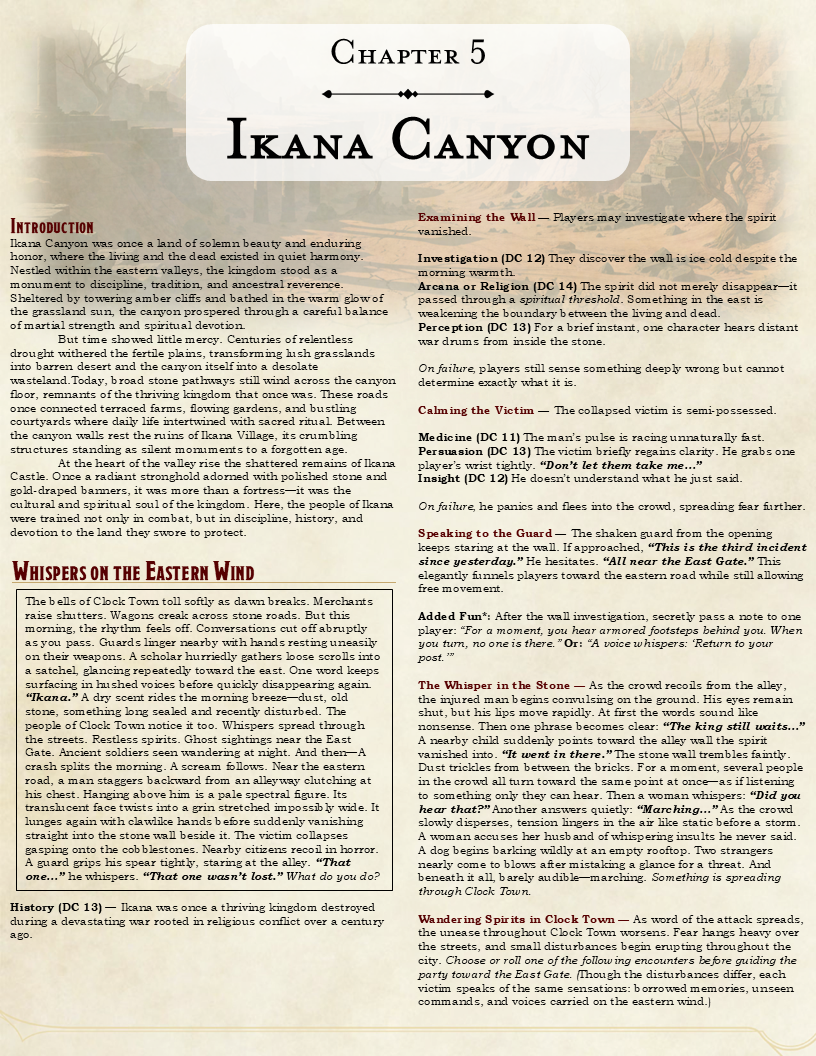
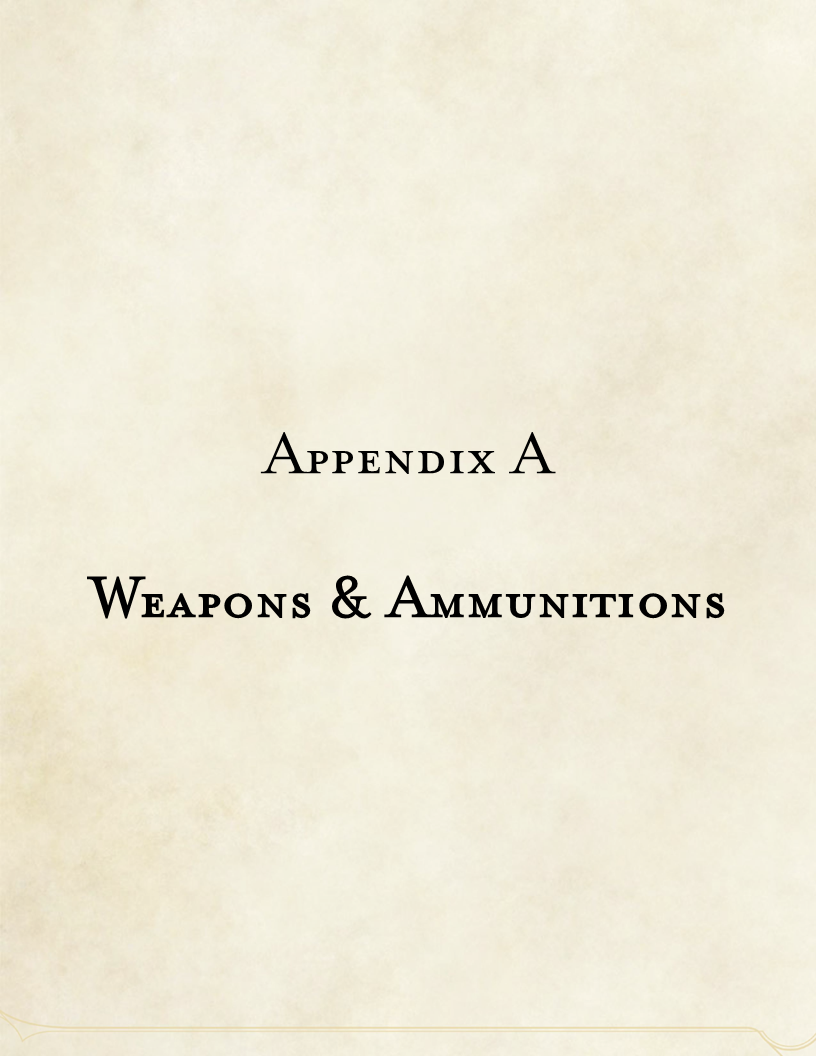
With over half the book completed and validated through playtesting, the remaining chapters and appendices will continue to evolve through iterative editing, formatting, and usability improvements to maintain a consistent experience across the entire adventure.
Completed Chapters
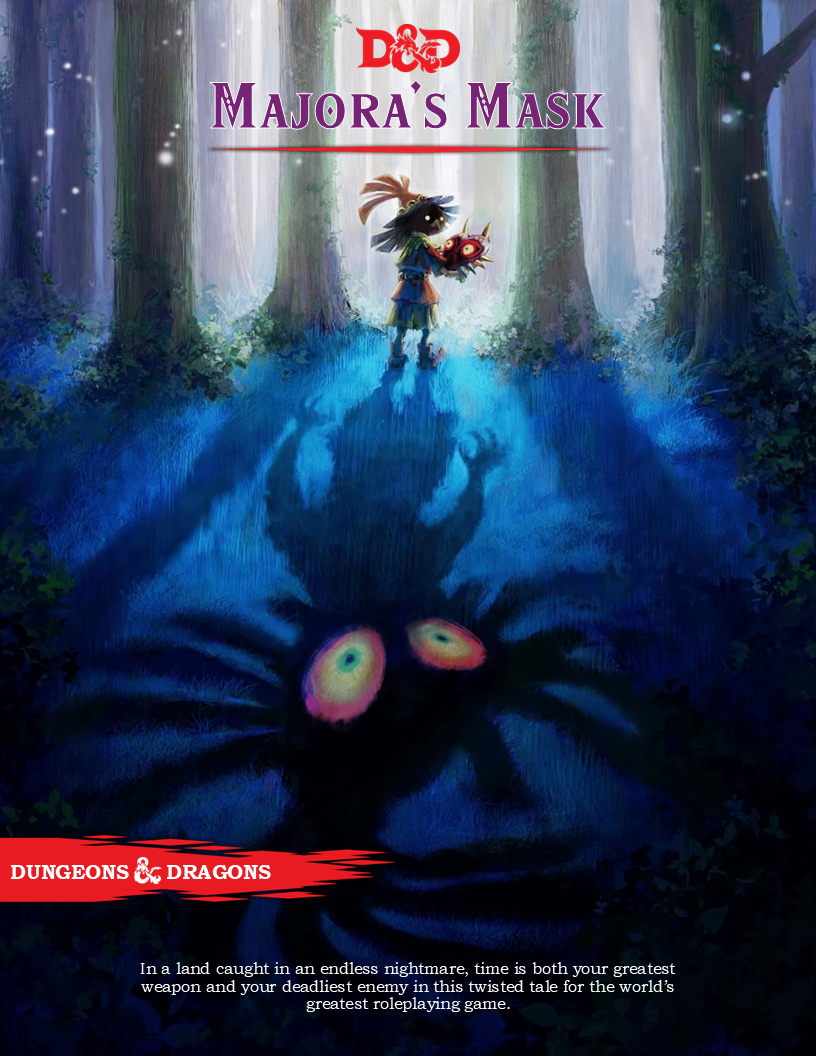
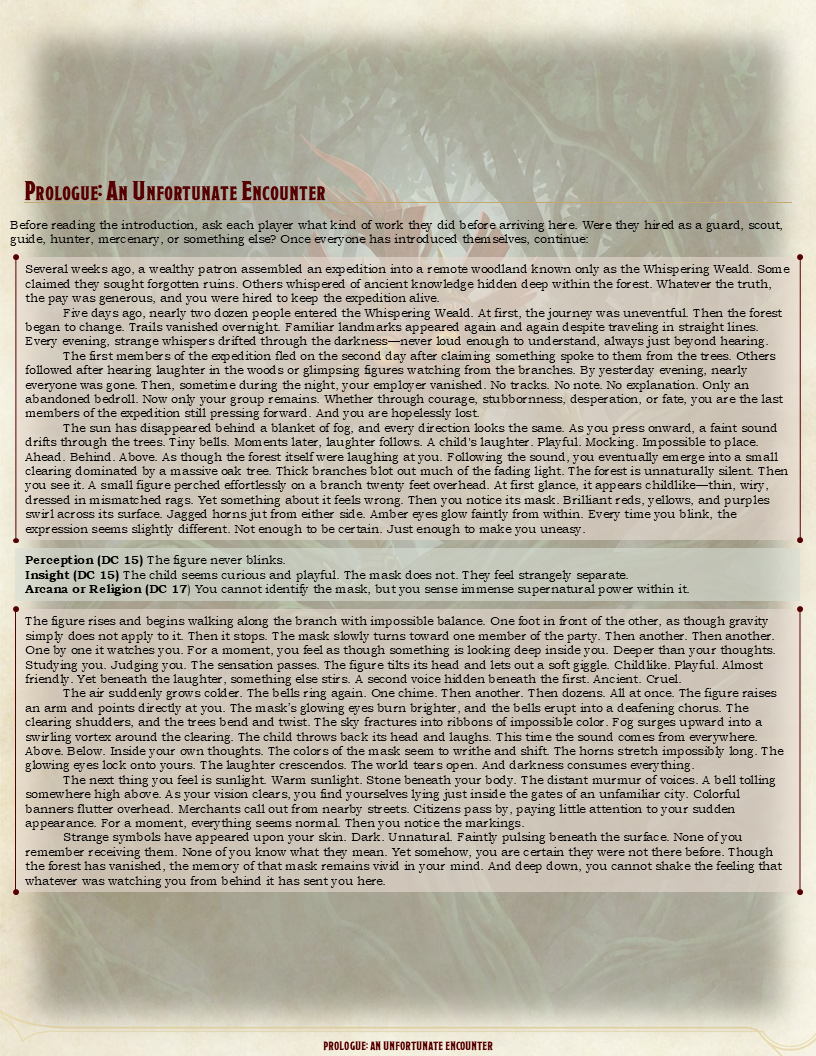
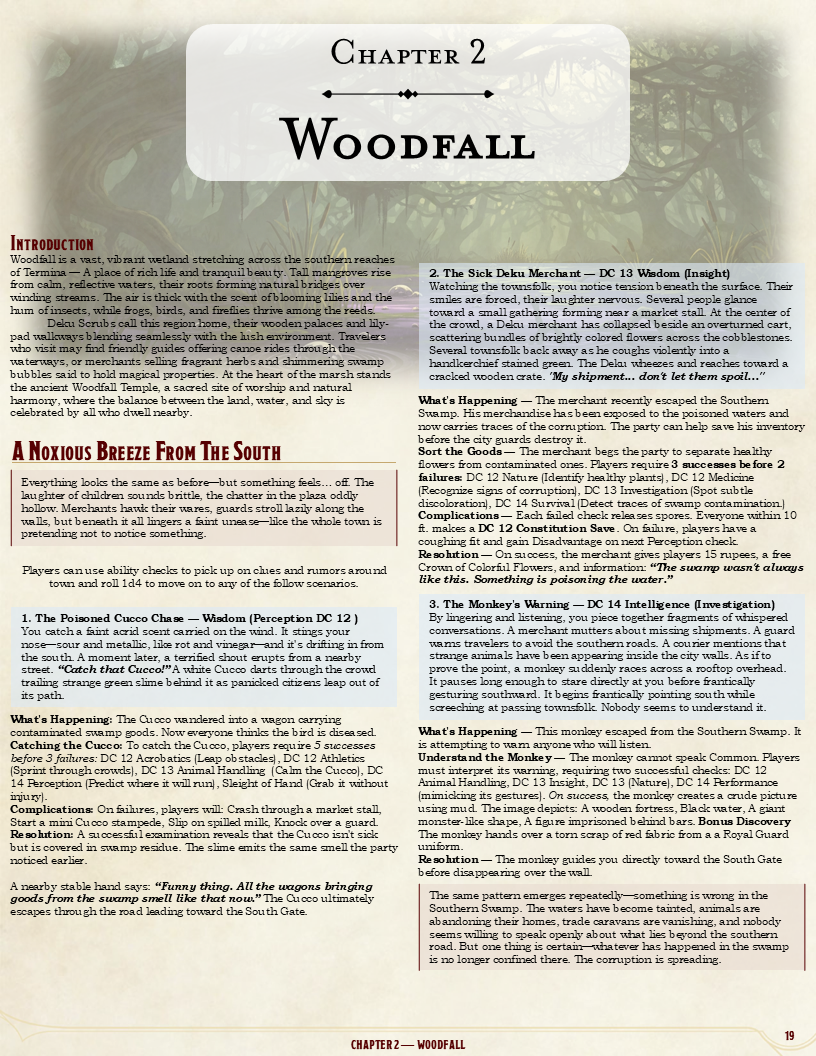
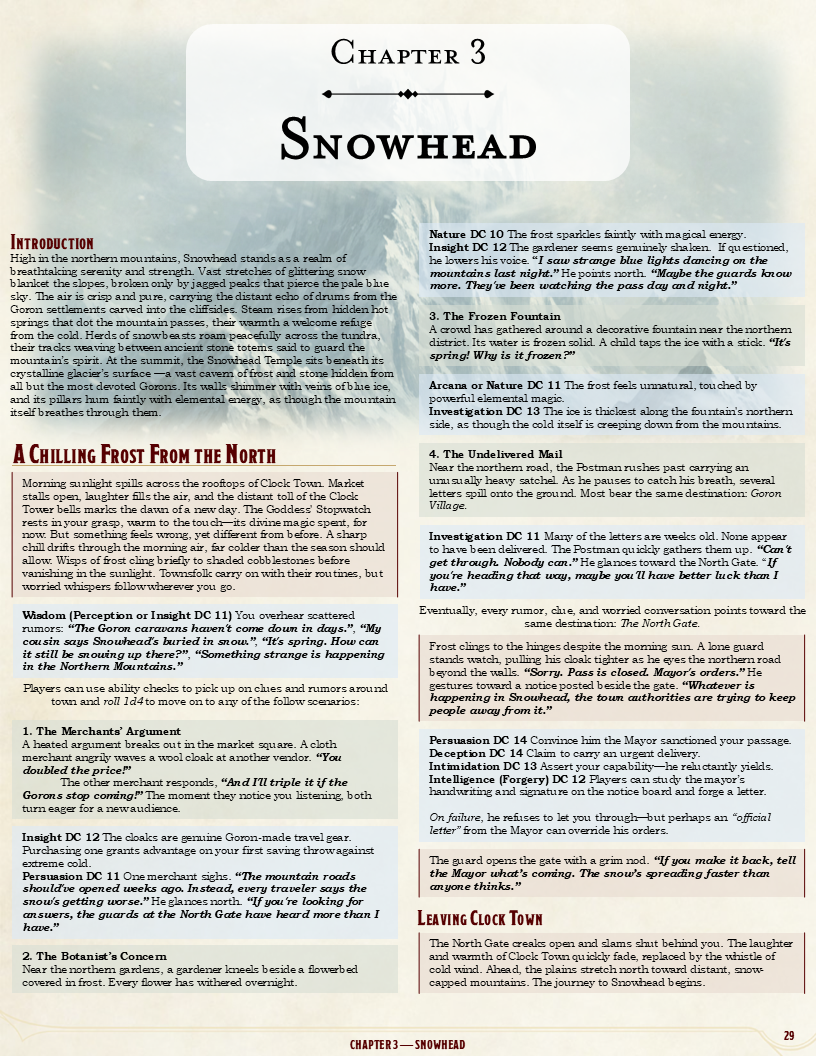
Chapters in Edit

Project Scale — To Date
Success Metrics
If published, success would be evaluated through:
- Faster encounter preparation
- Reduced page searching during gameplay
- Positive Dungeon Master and player feedback
- Campaign completion and continued engagement
Next Steps
- Complete remaining chapters
- Expand live playtesting
- Continue refining layouts and encounters
- Prepare the campaign for publication
Lessons Learned
Design Beyond Screens
Great design isn't defined by the medium. It's defined by the experience it creates.
Consistency Builds Confidence
Predictable layouts reduce cognitive load and make complex systems easier to navigate.
Design Systems Scale
Reusable components and standardized layouts made it possible to maintain consistency across a growing project.
Iteration Never Stops
Every playtest, revision, and completed chapter strengthened the overall experience.