

2025 — 2026
Designing Experiences Beyond the Screen
Applying UX principles to create an intuitive, player-centered tabletop RPG adventure book.
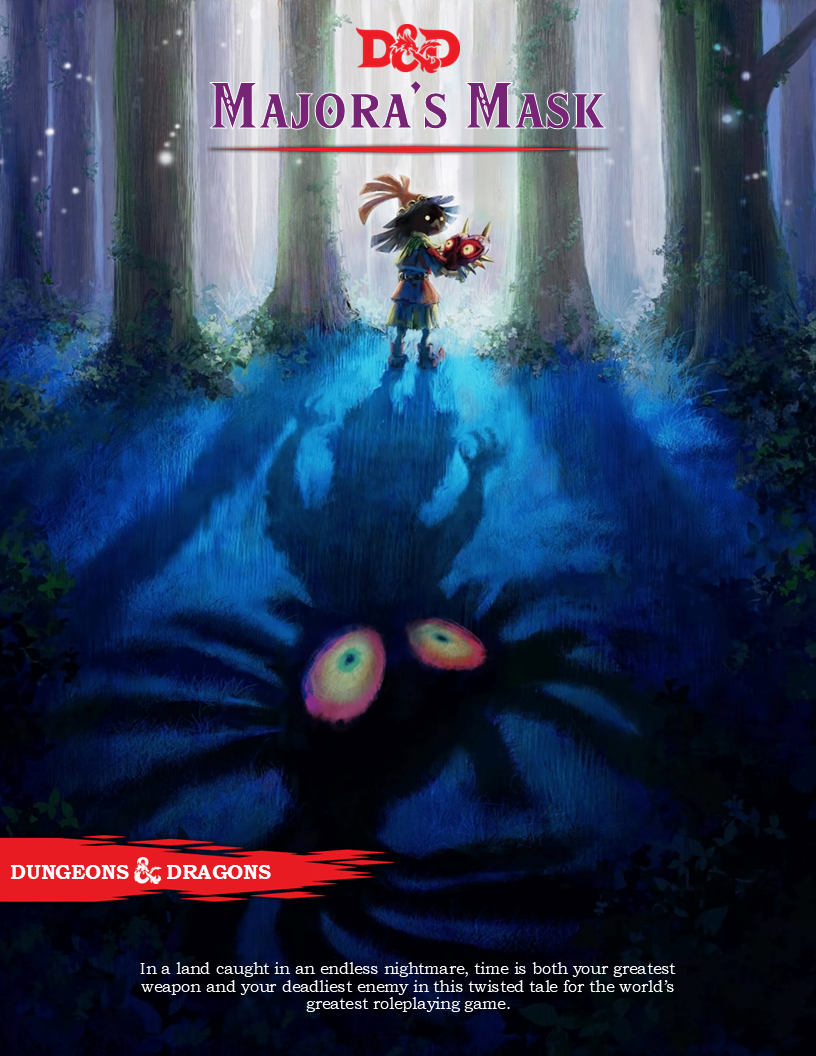
MAJORA’S MASK 5e is an ongoing personal project that adapts one of my favorite video games (The Legend of Zelda: Majora’s Mask) into a fully playable Dungeons & Dragons 5th Edition campaign. While inspired by Nintendo's original game, the project is much more than a simple adaptation. It explores how user experience principles can improve tabletop games by reducing cognitive load, improving information architecture, and creating more engaging experiences for both players and Dungeon Masters.
D&D ADVENTURE BOOK: MAJORA’S MASK 5e
ROLE
Sole UX Designer, Writer, Systems Designer, Layout Designer
TEAM
Personal Project
TOOLS
Power Point, Photoshop, Clip Studio Paint, Figma, D&D Beyond, ChatGPT, Google Gemini
STATUS
Ongoing (Multiple chapters complete)
READ TIME
2 Minutes
THE PROBLEM
Unlike digital products, tabletop role-playing games rely entirely on people to interpret rules, navigate stories, and manage complex interactions in real time. Traditional Dungeons & Dragons adventure books often require Dungeon Masters to flip between dozens of pages while simultaneously tracking combat, roleplaying non-player characters, and keeping players engaged. The challenge became:
How might a large-scale tabletop adventure be designed to minimize cognitive load while maximizing immersion, storytelling, and player agency?
Rather than simply writing an adventure, every chapter was designed with usability in mind, ensuring information is presented when it is needed, easy to scan during gameplay, and flexible enough to support the unpredictable nature of tabletop role-playing games.
APPLYING UX PRINCIPLES
Designing for Two Different Users
One of the unique challenges of this project was designing for two completely different audiences:
The Dungeon Master (DM)
Needs quick access to information.
Requires encounters to be easy and fun to run.
Must locate important details in seconds.
Often multitasks while narrating.
The Players
Need a sense of discovery.
Should never feel railroaded.
Require clear goals without revealing future surprises.
Need meaningful choices throughout the adventure.
Design decisions constantly balanced the needs of both groups.
INFORMATION ARCHITECTURE
Organizing Complex Information
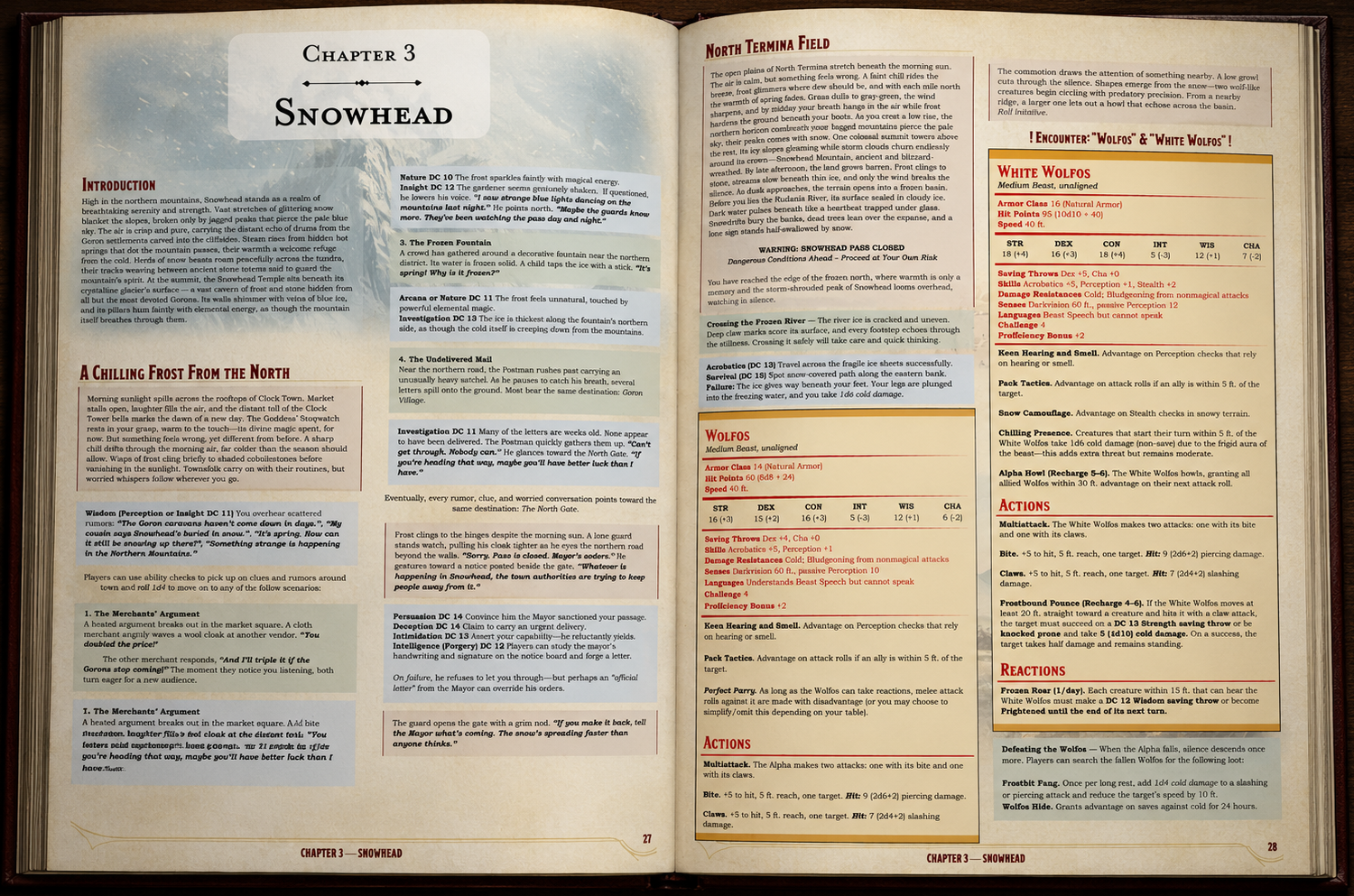
The adventure contains dozens of NPCs (Non-Player Characters), encounters, puzzles, maps, and branching storylines. To make navigation easier, every chapter follows a consistent structure.
Predictable page layouts
Consistent encounter formatting
Repeatable NPC stat blocks
Clear chapter hierarchy
Visual separation between gameplay elements
Cross references where needed
This consistency allows Dungeon Masters to spend less time searching and more time storytelling.
PROGRESIVE DISCLOSURE
Showing Information Only When Needed
One of the biggest design goals was preventing information overload. Instead of presenting every possible outcome at once, information is revealed progressively throughout each chapter. Examples include:
Story information appearing only after players reach key locations.
Enemy tactics presented beside encounters rather than in separate appendices.
Hidden story elements reserved for Dungeon Master notes.
Puzzle solutions separated from player-facing descriptions.
This approach keeps pages cleaner while preserving surprises for players.
VISUAL HIERARCHY
Designing for Fast Decision Making
Because Dungeon Masters frequently reference the book during live gameplay, every page was designed to be quickly scannable. Three color-coded content types help distinguish information at a glance:
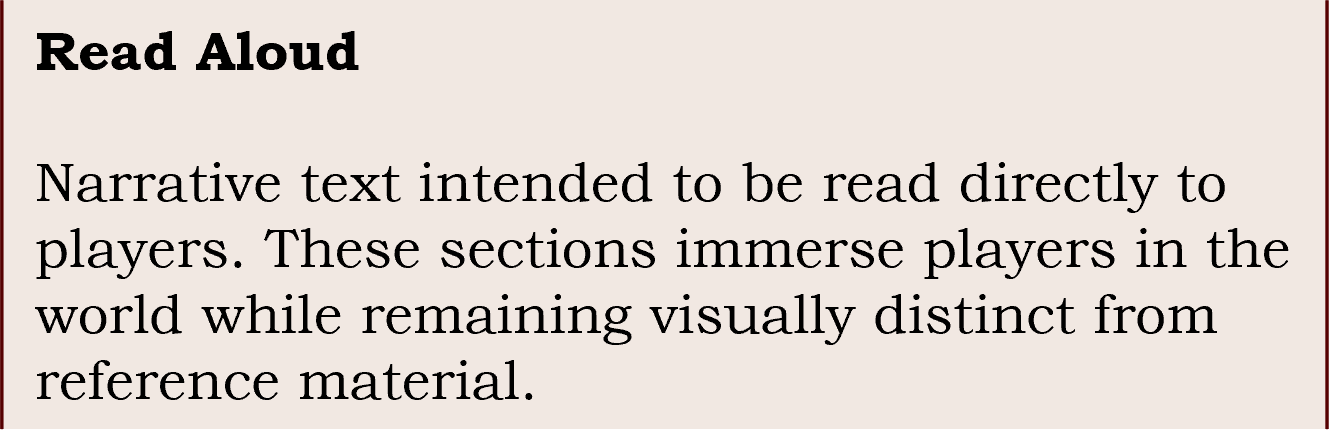
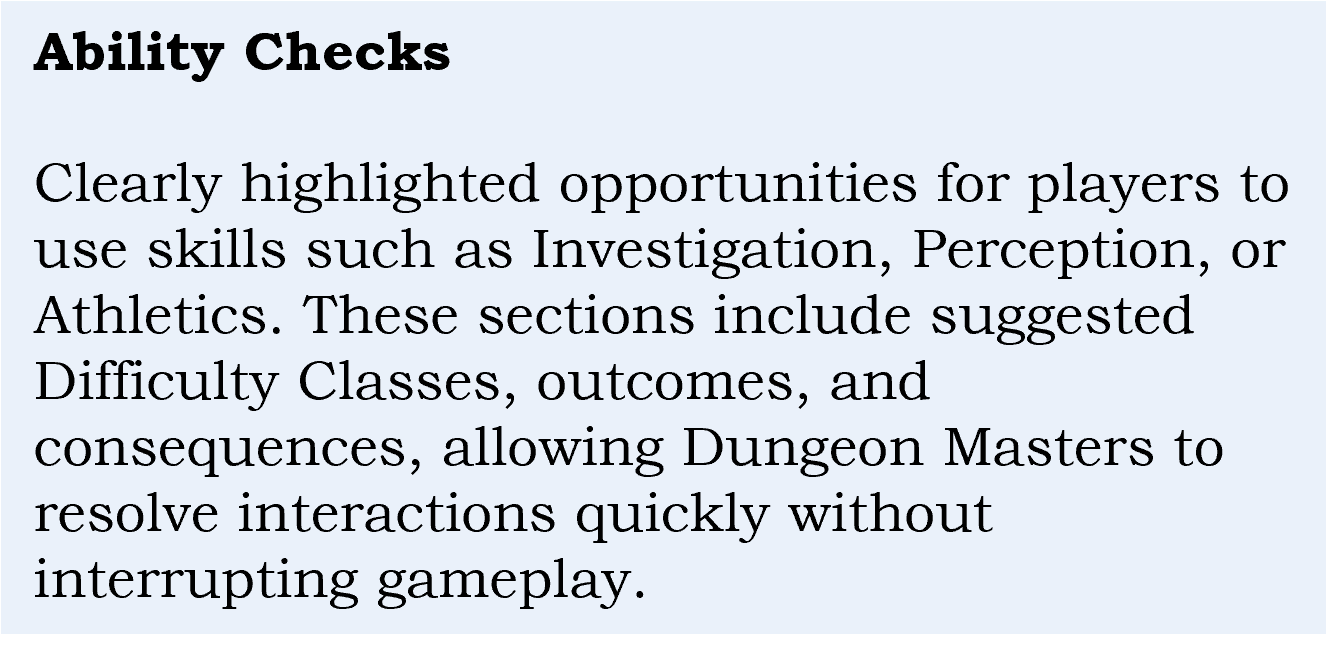
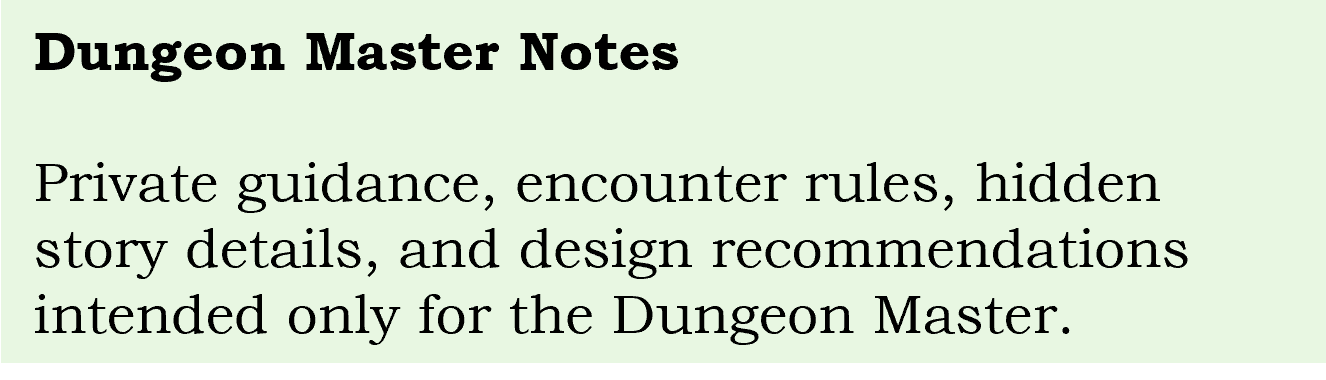
By consistently separating these content types through color, players receive immersive storytelling while Dungeon Masters can instantly recognize the information they need.
ITERATIVE DESIGN
Every Chapter Was Revised Repeatedly
Designing an engaging tabletop experience required continuous iteration. Throughout development, encounters were repeatedly refined to improve pacing, challenge, and clarity. Areas frequently revised included:
Combat balance
Puzzle difficulty
Story pacing
NPC dialogue
Read-aloud descriptions
Encounter layouts
Reward structures
Rather than treating writing as a linear process, every chapter evolved through repeated cycles of testing, evaluation, and revision.
UX WRITING
Writing for Real-Time Use
Unlike traditional books, tabletop adventures are not read from beginning to end. They are used as live reference documents. This fundamentally changed how information was written.
Content was intentionally designed to be:
Short and scannable
Action-oriented
Easy to reference under pressure
Consistent in terminology
Organized using headings and spacing
Every formatting decision aimed to reduce cognitive load during gameplay.
CURRENT PROGRESS
Ongoing Development
This project continues to evolve. Current progress includes:
Multiple completed chapters
Hundreds of pages written
Original encounters
Custom enemy stat blocks
Fully redesigned progression
Original dialogue and narrative
Layout system established
Additional chapters currently in development
Each completed chapter informs improvements made to future sections of the campaign.
LESSONS LEARNED
Designing this project reinforced something I have come to appreciate throughout my UX journey: good design is not limited to digital products.
Whether designing software, educational tools, or tabletop games, the same principles consistently emerge. Understanding users, organizing information effectively, reducing friction, and iterating based on feedback all contribute to more enjoyable experiences.
This project challenged me to think beyond screens and reminded me that great design is ultimately about helping people accomplish their goals with confidence while creating memorable experiences along the way.