RETAIN
Resuscitation Training for Neonatal Residents
Designing a serious game that transformed neonatal resuscitation training into an interactive learning experience. RETAIN was a collaborative university project developed alongside neonatal specialists, transforming a fantasy role-playing game engine into a medical simulation for practicing critical decision-making in a safe, engaging environment.

Turning a fantasy engine into a medical training tool
The challenge was to transform a fantasy game engine into an effective medical training tool. By combining realistic workflows with intuitive interactions and progressive learning, the experience made complex procedures easier to learn and remember.
The Design ChallengeCreate an engaging medical simulation using technology never intended for healthcare training, balancing educational goals, usability, and the limitations of a fantasy role-playing game engine.
Design PrinciplesProgressive Learning
Medical concepts introduced gradually to build learner confidence.
Realistic Workflows
Gameplay mirrored real neonatal resuscitation protocols.
Collaboration with Experts
Neonatal specialists ensured medical accuracy throughout.
Immediate Feedback
Visual, audio, and gameplay cues reinforced decisions.
Simplicity Over Complexity
Streamlined interactions kept learners focused on tasks.
Gameplay Flow
Designed progression through each training scenario for gradual, engaging learning.
UX Writing
Wrote dialogue and instructional content guiding players through procedures.
Experience Design
Mapped interactions and learning sequences based on real clinical workflows.
Sound Design
Created custom Foley effects, music, and voice acting for immersion.
Neonatal Specialists
We worked closely with 2 neonatal specialists to understand real-world procedures, educational goals, and clinical best practices.
Reviewing Current Methods
Reviewed neonatal resuscitation training methods to identify opportunities for interactive, game-based learning:
- Pulse!! — Virtual emergency medicine simulator
- OpenLabyrinth — Branching virtual patient cases
- Second Life Medical Simulations — Virtual hospital training environments
- Traditional mannequin-based simulation — The industry standard
Medical Algorithm
Used the official neonatal resuscitation algorithm as the foundation for gameplay progression and scenario design.
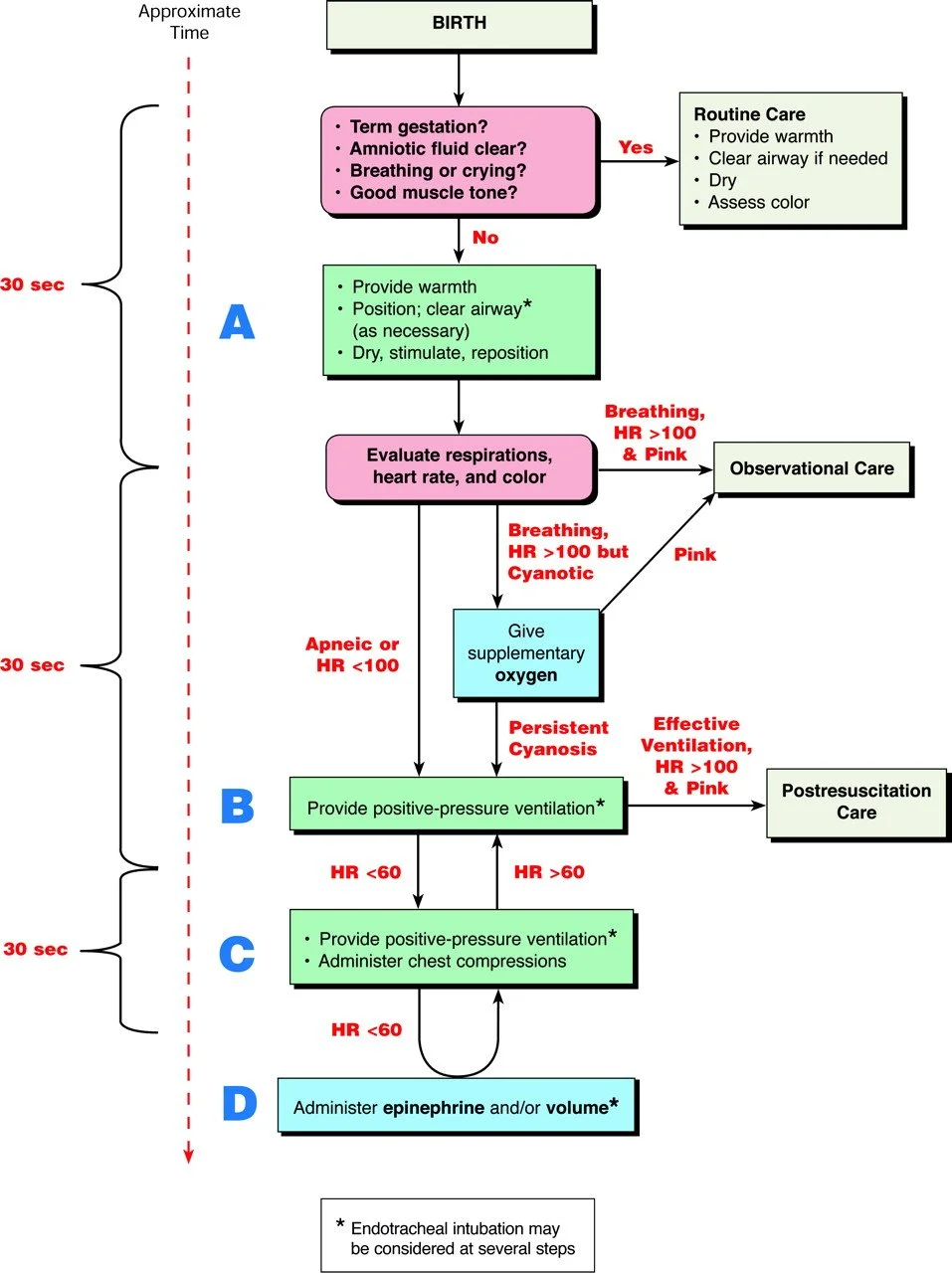
The neonatal resuscitation algorithm by the International Liaison Committee on Resuscitation.
Key Insight
Looking back, RETAIN was developed during a time when digital serious games for healthcare were still emerging — highlighting the unique challenge of adapting a commercial fantasy engine into a medical education tool.
Transforming Medicine into Gameplay
We mapped the resuscitation process into a clear sequence of player actions mirroring real clinical decision-making. I designed the learning progression for the tutorial and three escalating scenarios, using progressive disclosure to introduce new concepts while reinforcing previously learned skills.
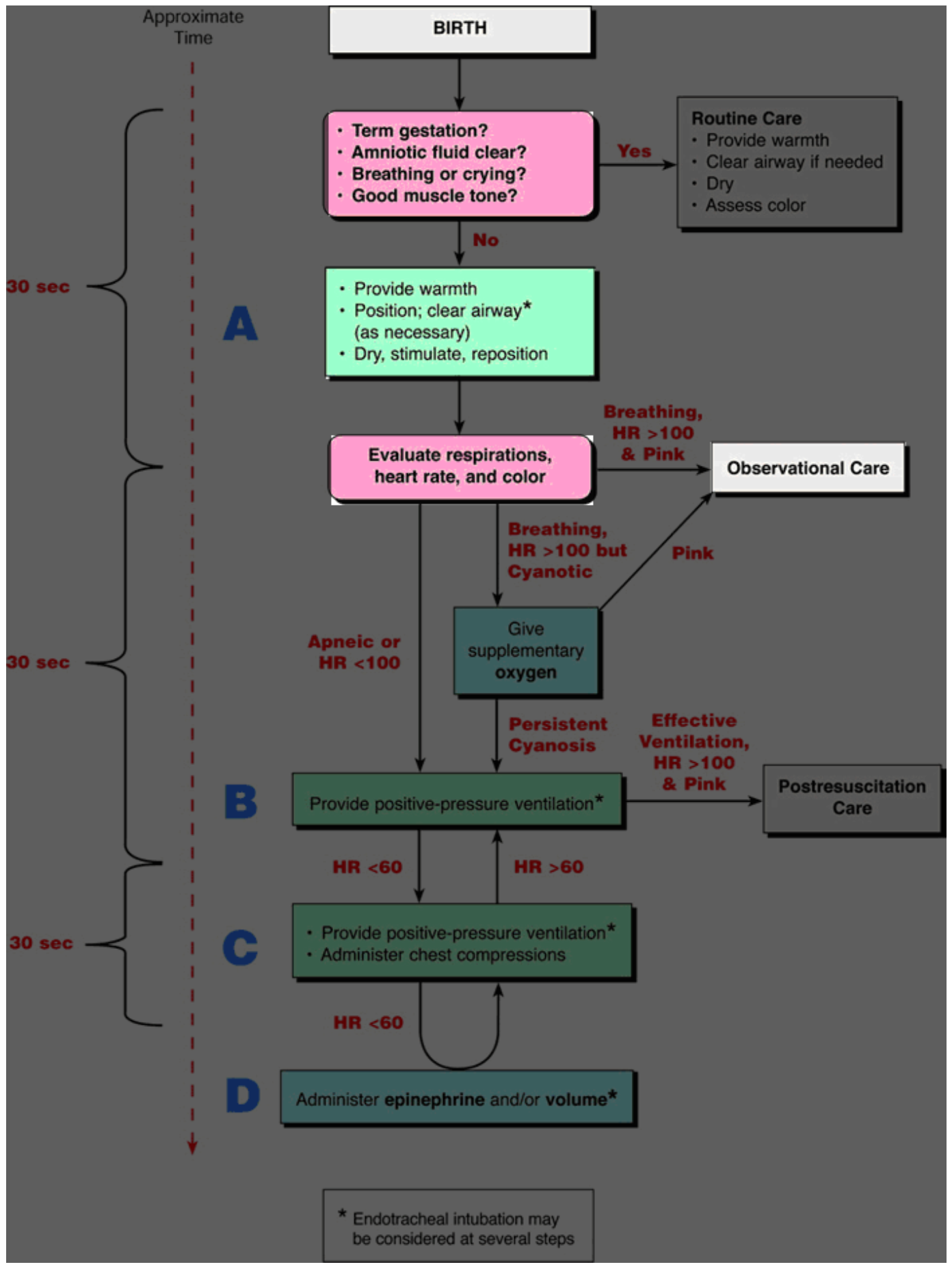
Level 1 (Easy) — parts of the algorithm covered.
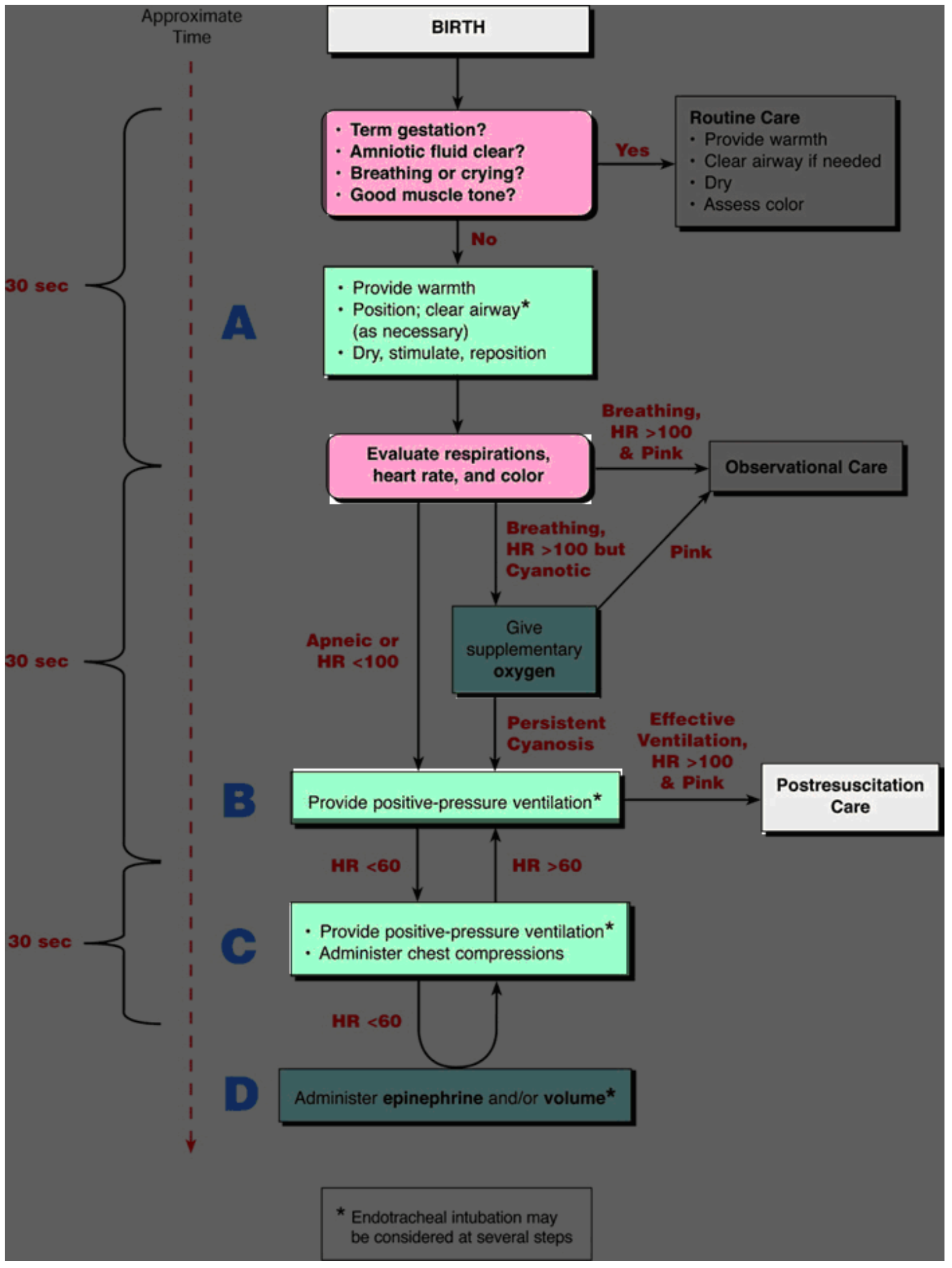
Level 2 (Medium) — parts of the algorithm covered.
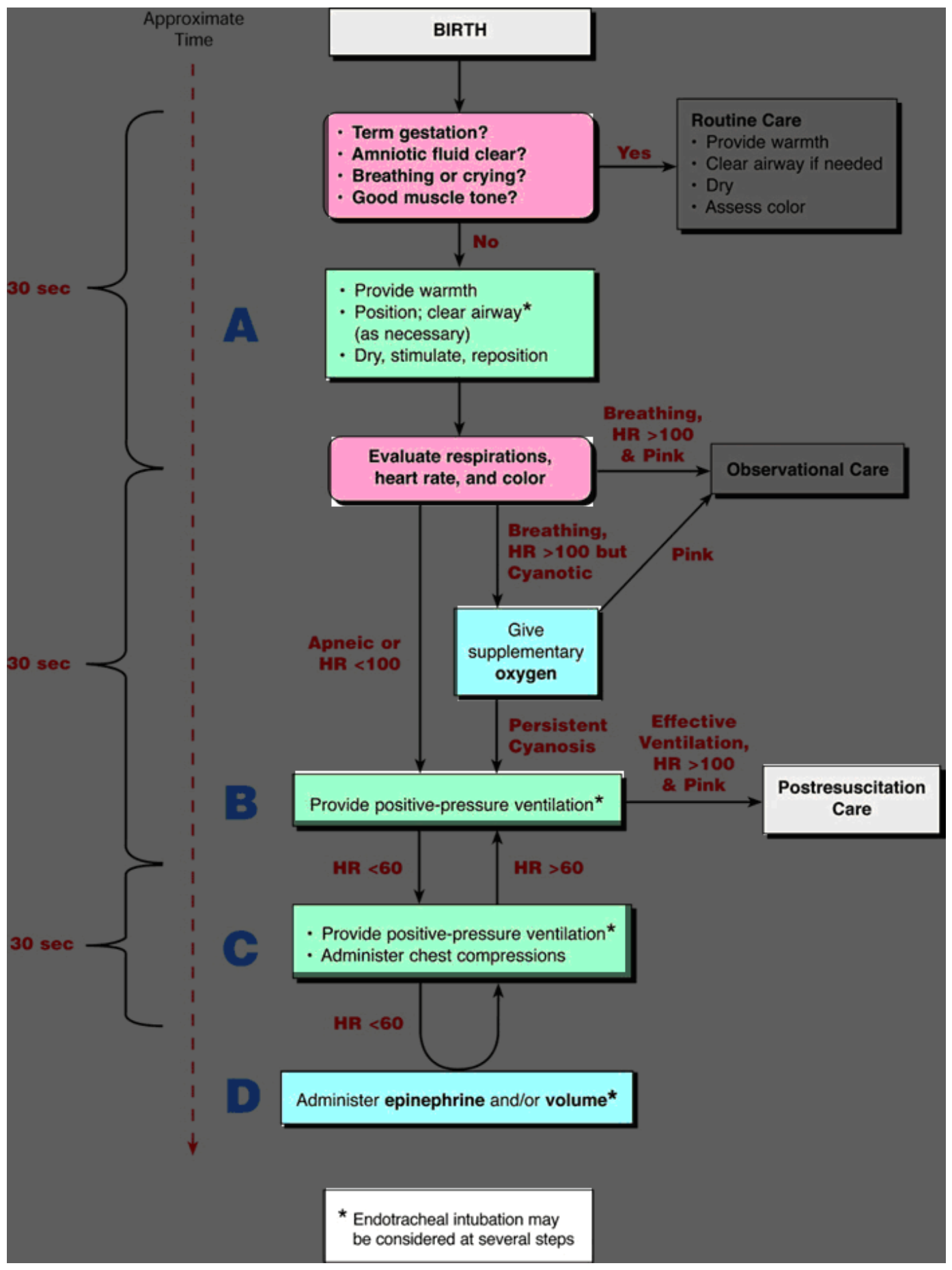
Level 3 (Hard) — parts of the algorithm covered.
Technical Constraints
We designed intuitive learning experiences while working within the constraints of a game engine never intended for healthcare training.
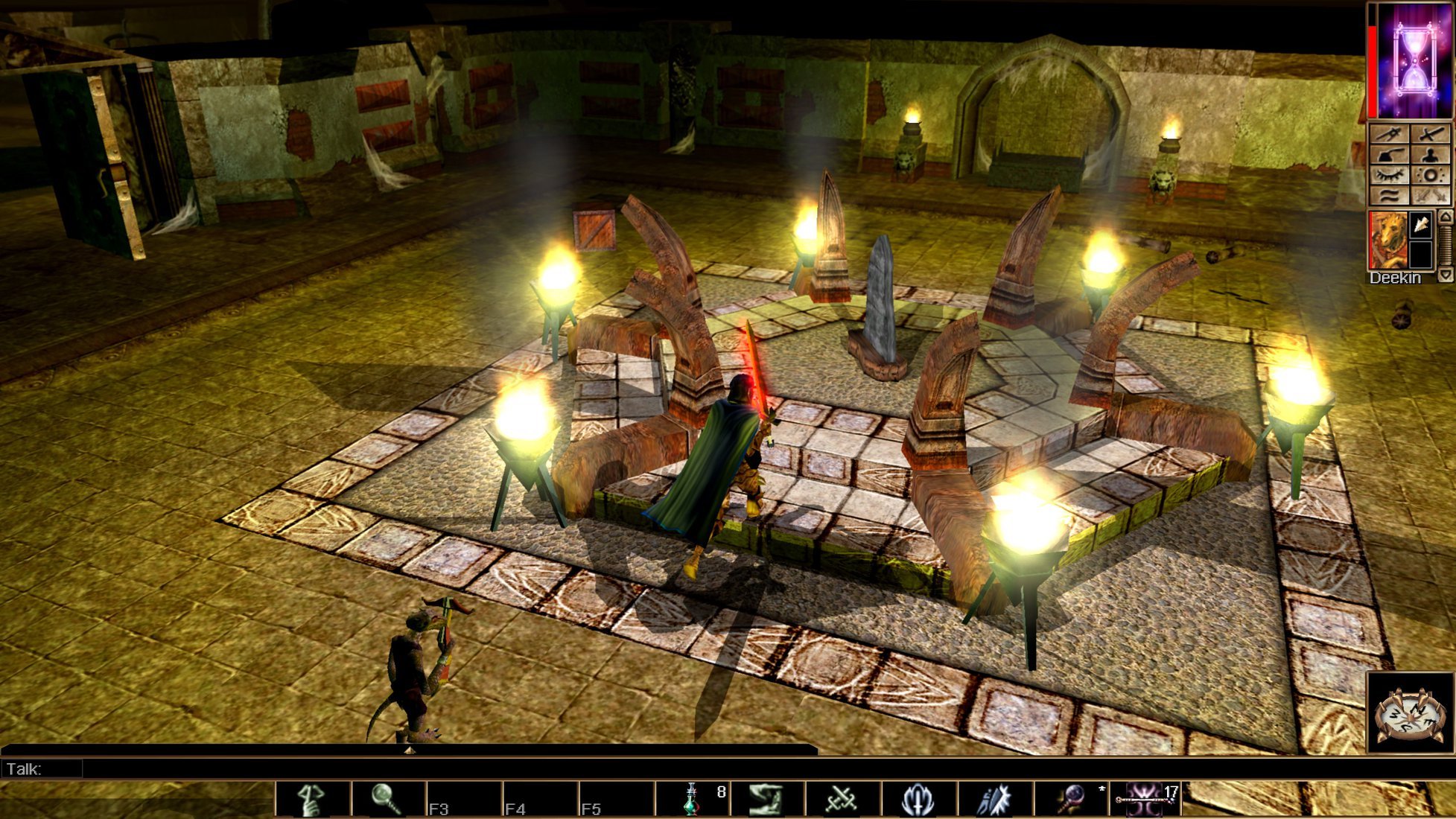
Gameplay screenshot from Neverwinter Nights, the base fantasy engine RETAIN was built on.
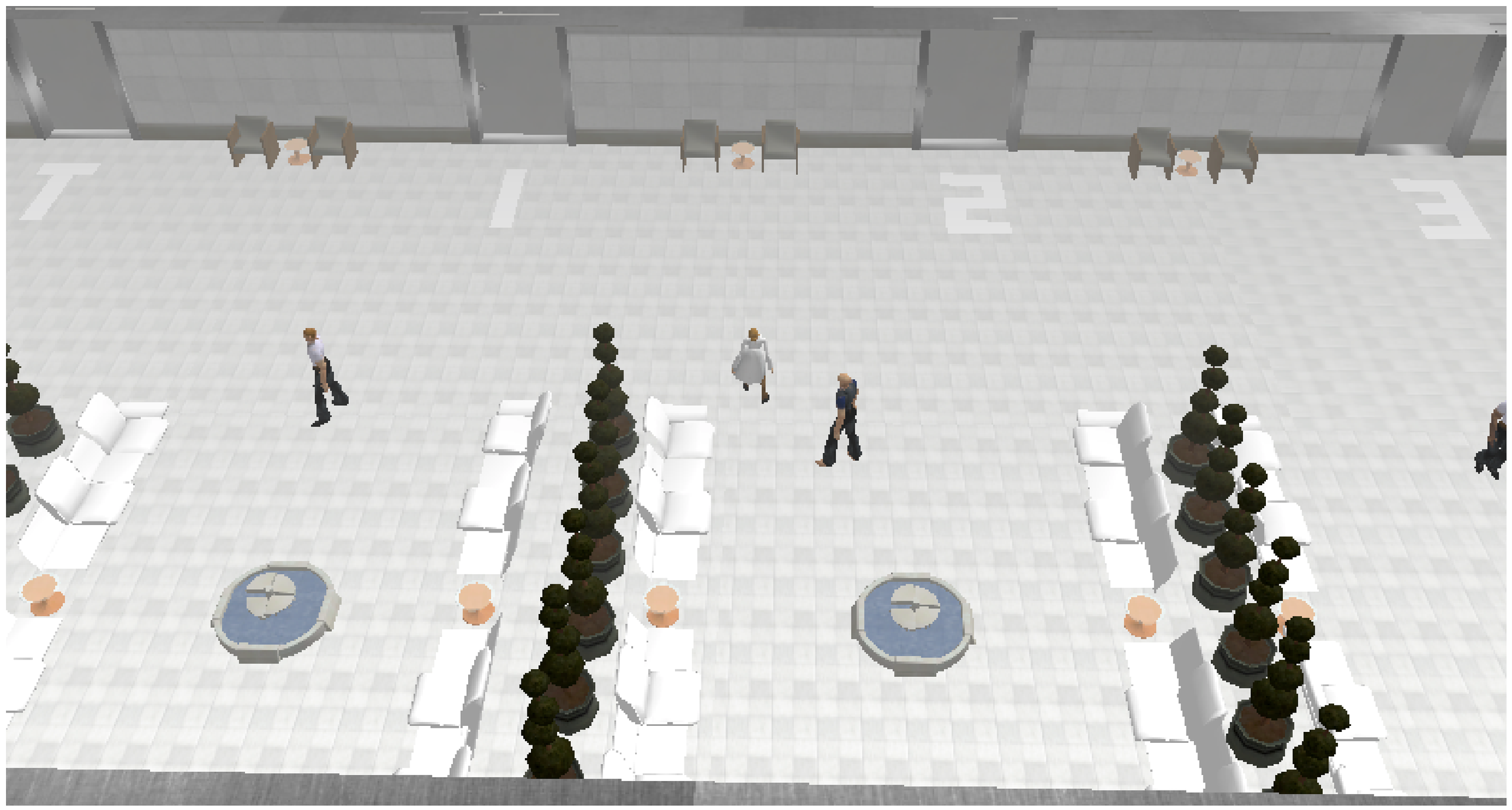
A screenshot from RETAIN, adapted from that same engine into a neonatal training simulation.
From Protocol to Play
Insights from real-world neonatal training informed the wireframes, interactions, and final gameplay experience.
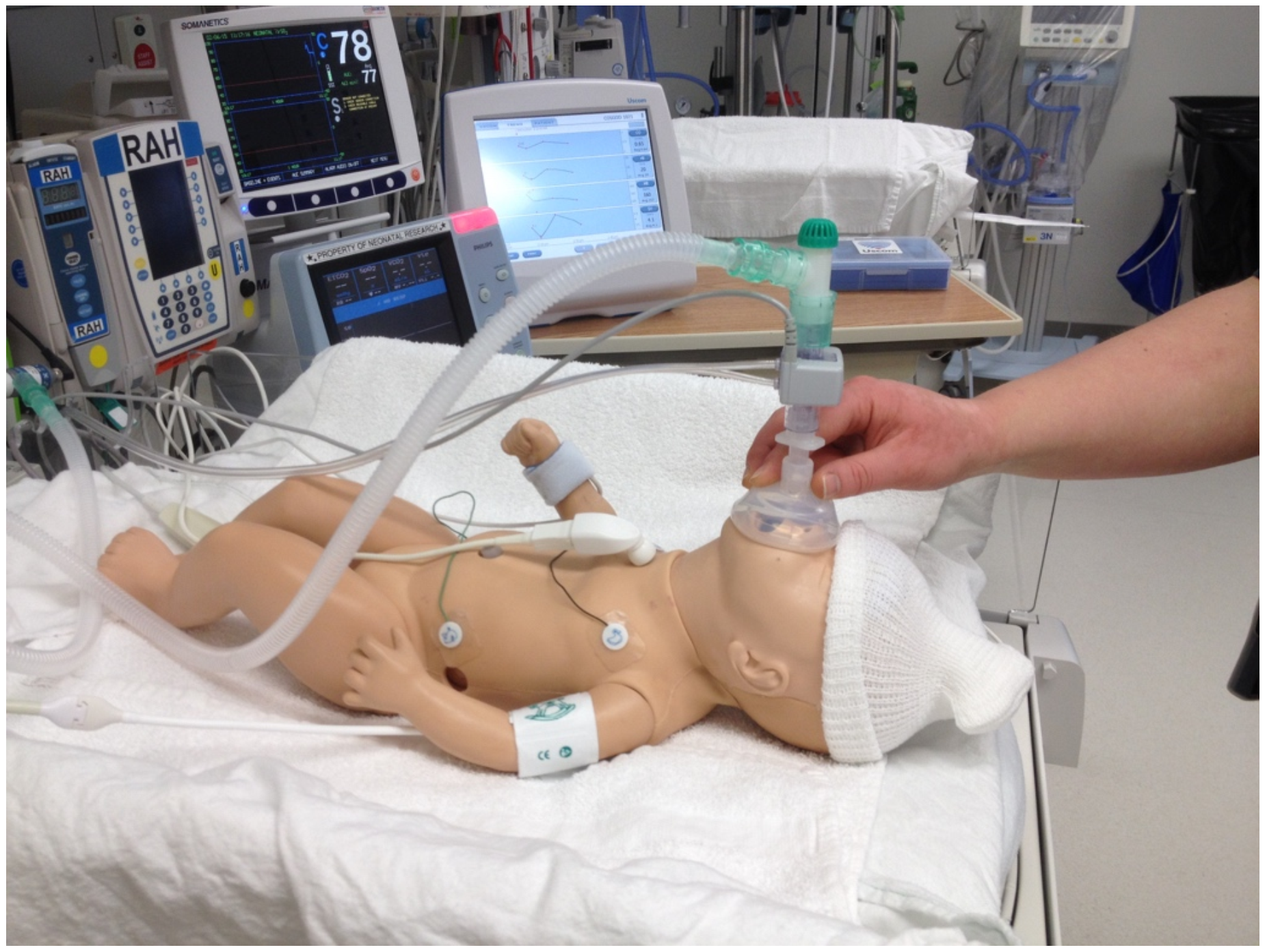
Traditional mannequin-based training, the real-world protocol RETAIN was built from.
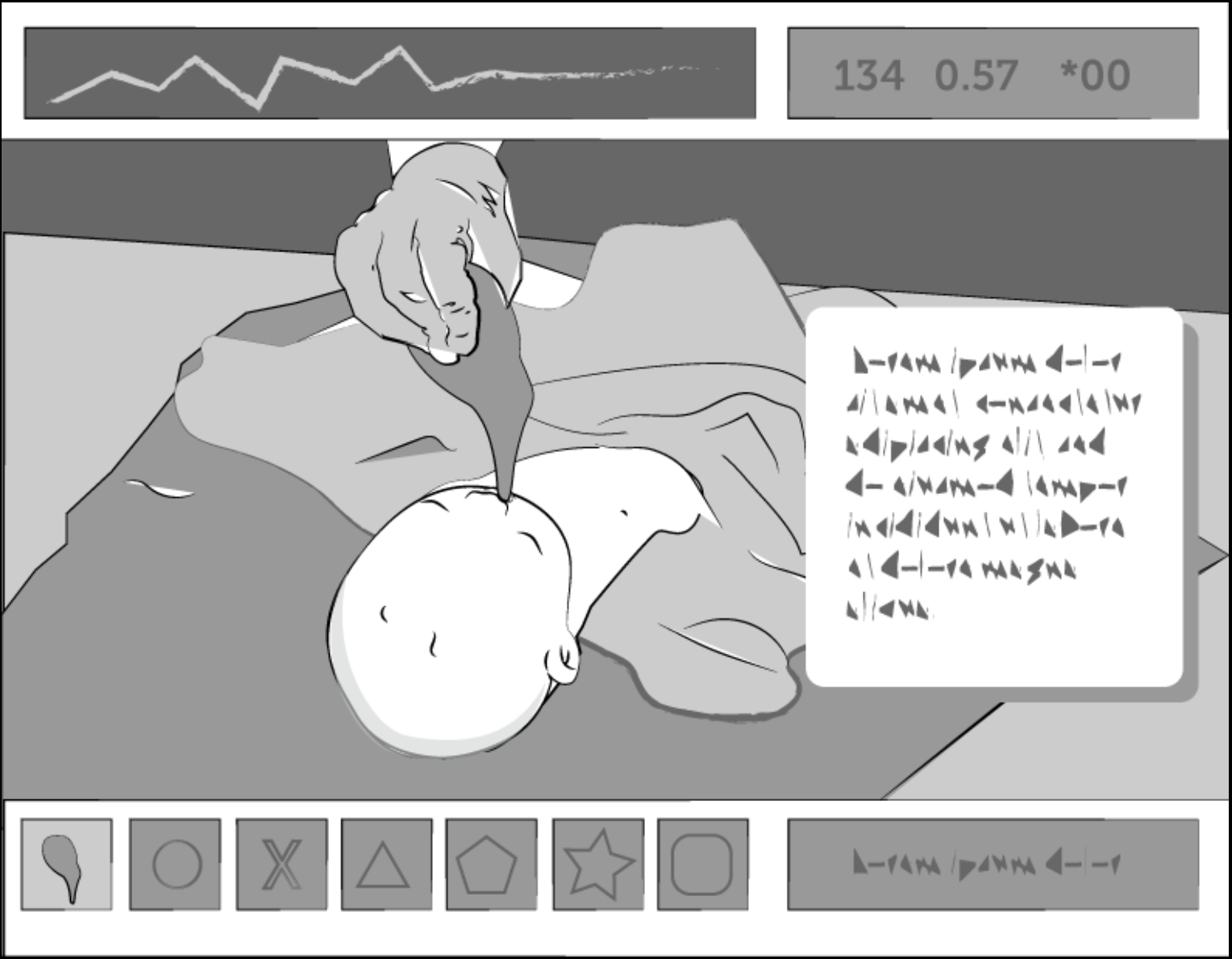
Early wireframe translating that protocol into an interactive sequence.
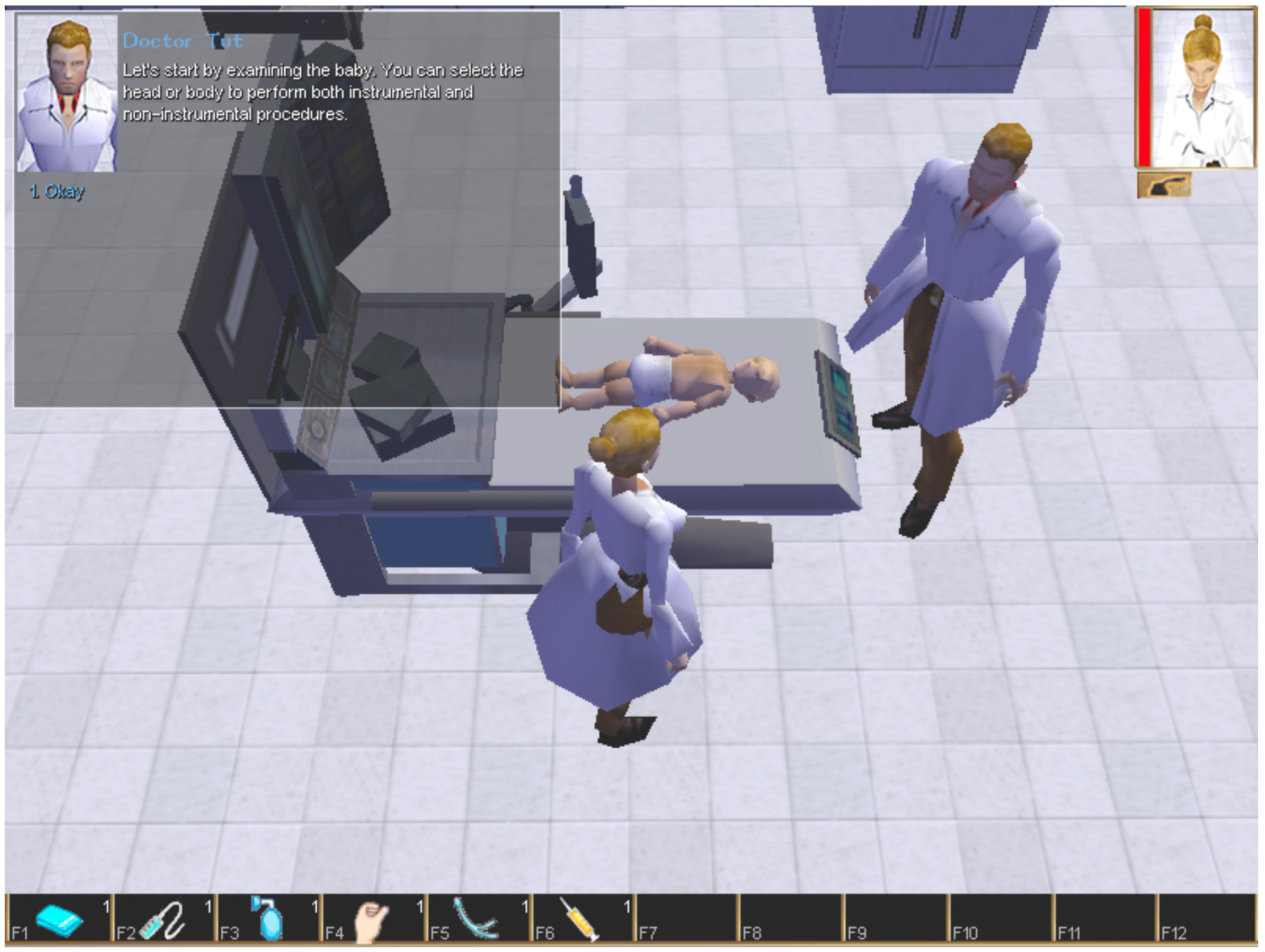
In-game footage of the tutorial (Level 0), introducing players to the training scenario.
Building the Experience
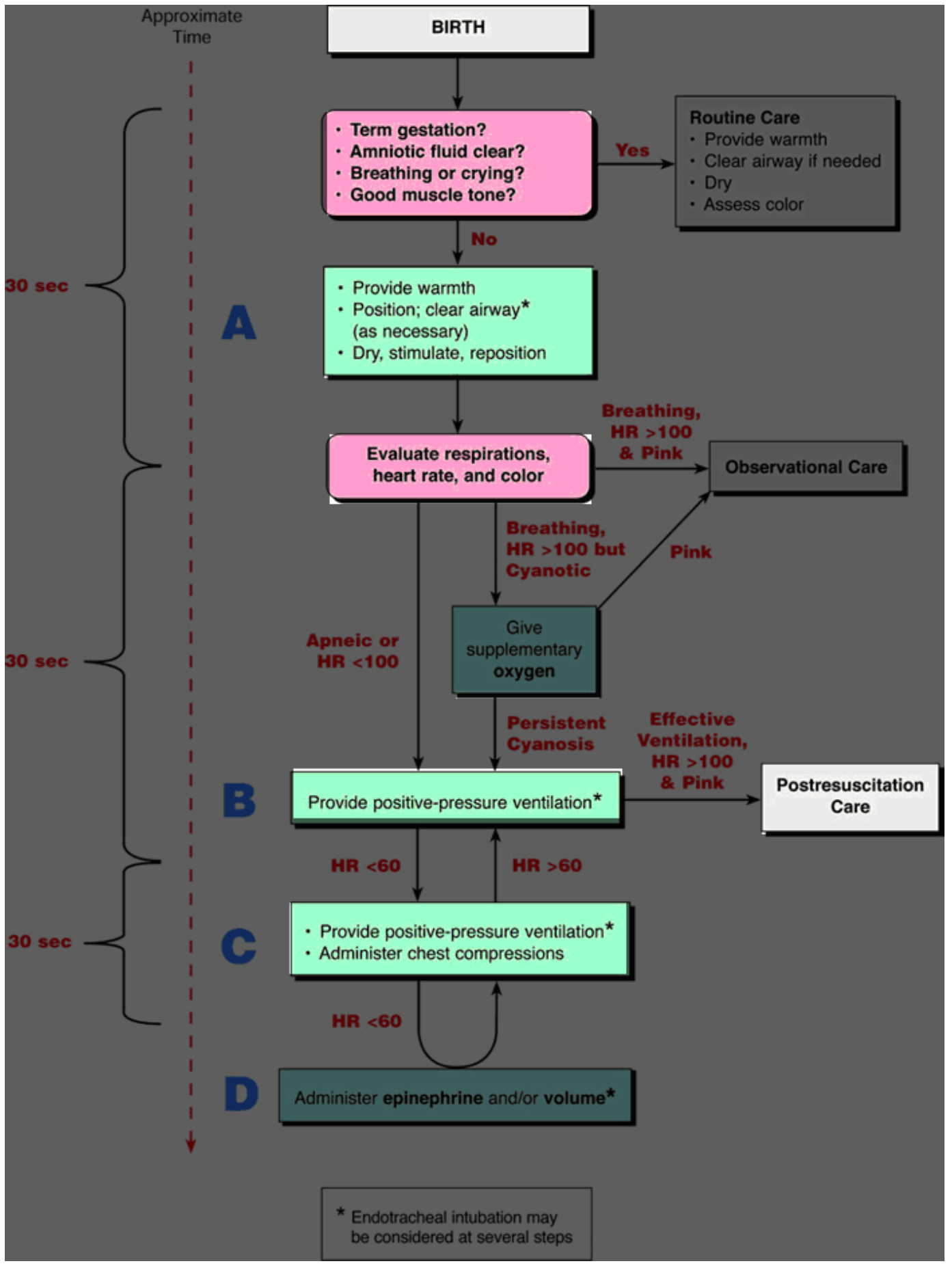
Mapping level procedures against the resuscitation algorithm.
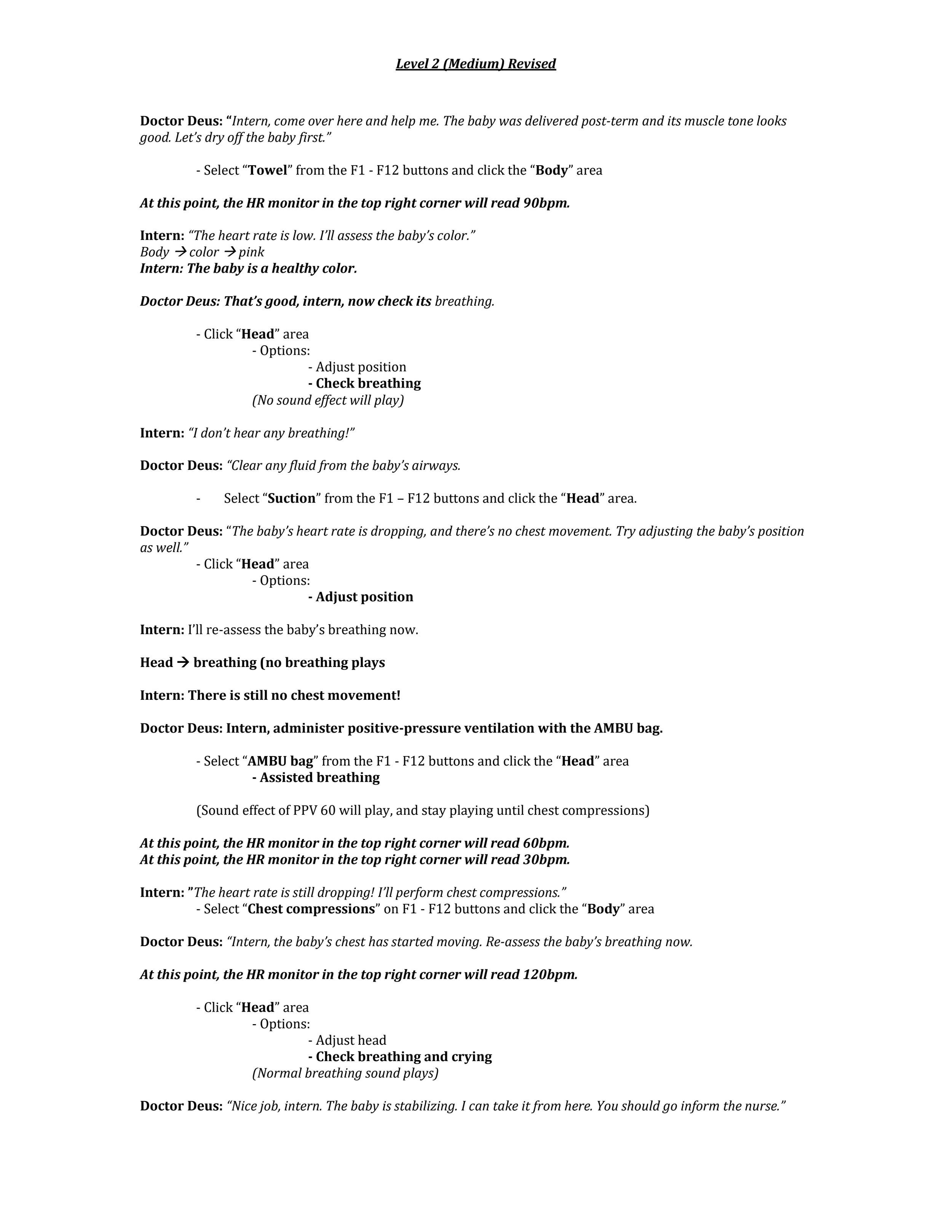
Writing dialogue and structuring level progression.
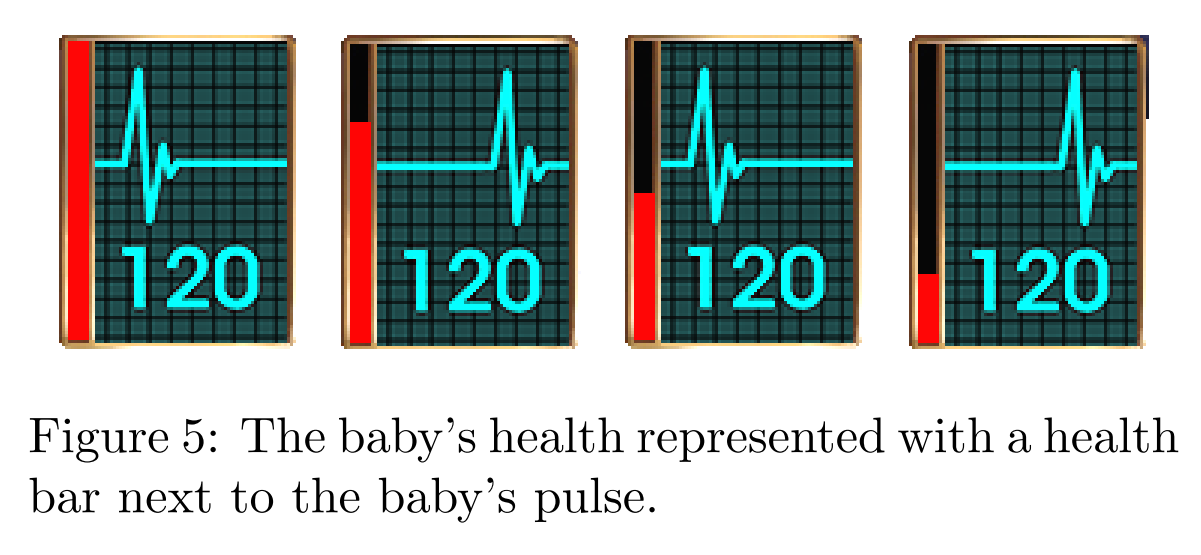
Designing an on-screen UI for common operating room monitoring equipment.
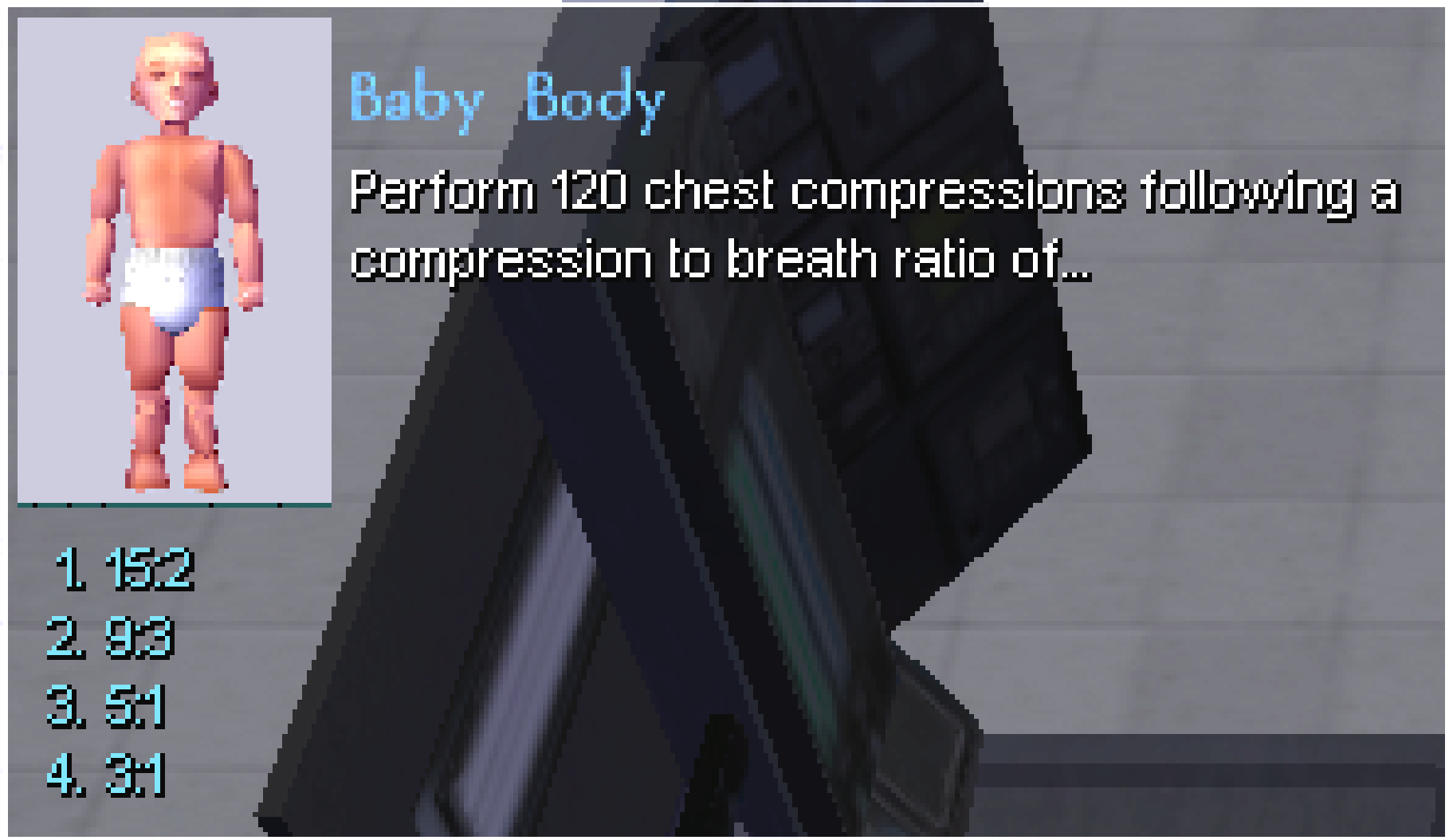
Designing interactive gameplay components, with options grounded in real clinical procedures and varied by scenario — adult versus neonatal patients, for example — to test the learner's knowledge and retention.
Usability Testing
Regular feedback from neonatal specialists, classmates, instructors, and the project team guided iterative improvements to medical accuracy, educational effectiveness, gameplay, interface design, and scenario difficulty.
This audio was edited from a longer recording for brevity. An AI voice filter has been applied to protect the privacy and confidentiality of my former instructor.
Published Research
The project became the subject of a peer-reviewed research paper exploring the use of serious games for neonatal resuscitation training. I was proud to contribute as a co-author.
Media Coverage
RETAIN was featured by Global News on television and online, highlighting its innovative approach to healthcare education. View the feature here.
Clinical Collaboration & Testing
Developed in partnership with neonatal specialists and evaluated by healthcare professionals at the Royal Alexandra Hospital in Edmonton, Alberta, ensuring the experience aligned with real clinical practices.
Where Is RETAIN Today?
The original prototype laid the foundation for an educational initiative that continued beyond our team's involvement. The RETAIN concept has since expanded into further published research and a licensed board game used in neonatal resuscitation training.
Reflection: What This Project Taught Me About UX
Although RETAIN predated my formal education in UX design, it introduced me to many of the principles that continue to shape my work today: user-centered design, collaboration, and iterative problem-solving.
"Great design isn't about the technology — it's about helping people succeed."